Blanket Blackout No Order: Sudden Internet Shutdown During CJP Protest
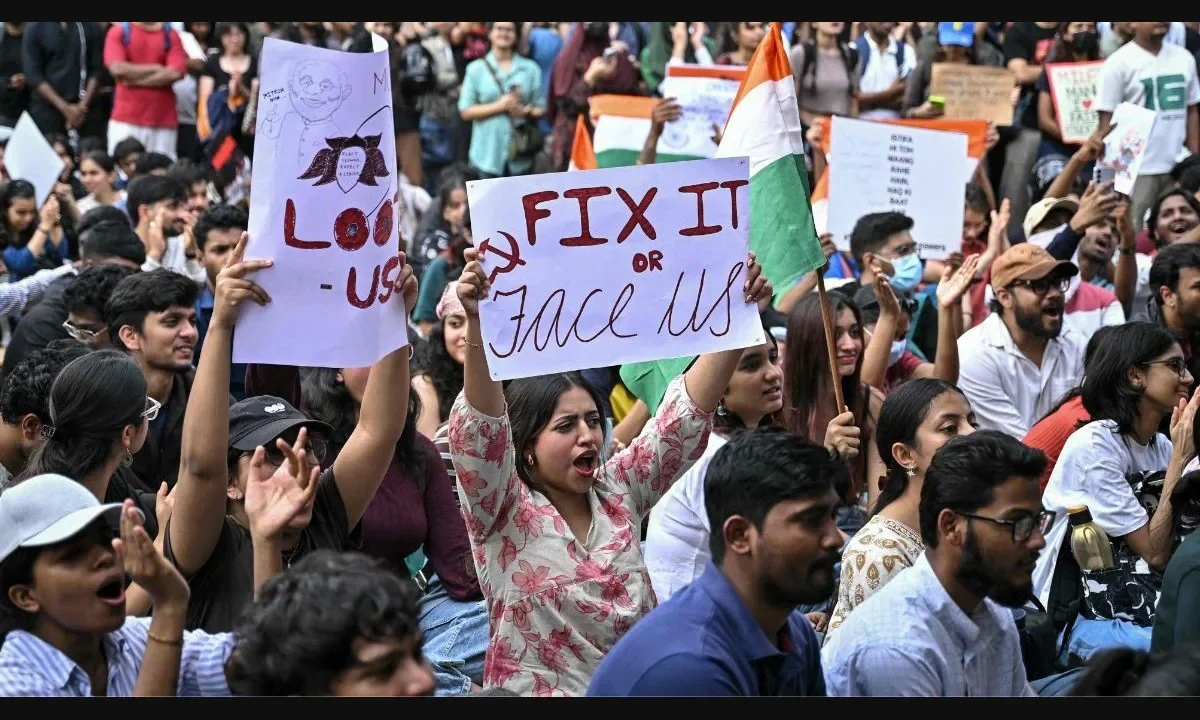
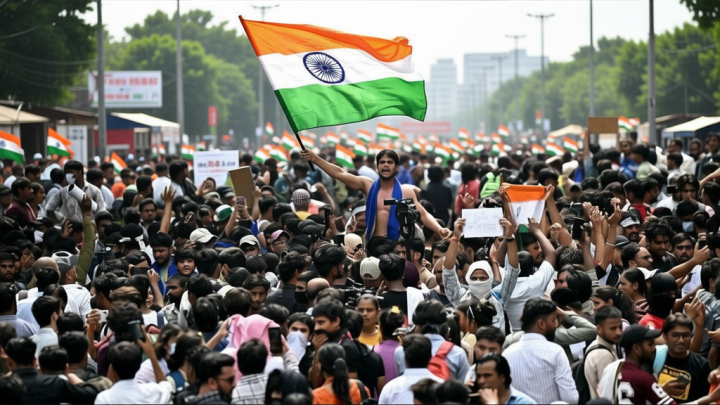
Indiadailyupdate.com – Blanket blackout no order Sudden internet connectivity disruption has ignited widespread debate as the Central Janta Party’s ‘Chalo Sansad’ march proceeded toward Parliament. Mobile services were abruptly halted while demonstrators gathered to demand Education Minister Dharmendra Pradhan’s resignation. The unexpected cutoff continued through July 20 evening, prompting sharp criticism from various civic groups. The CJP shared a screenshot of an SMS notification on social media platforms stating: “As per government instructions Internet services have been stopped in your area till further notice. REGINF.”
Legal Framework and Procedural Concerns
The Internet Freedom Foundation strongly criticized the government’s approach, pointing out that no official directive accompanied the sudden shutdown. According to the organization’s analysis, several key authorities failed to publish suspension orders: the Ministry of Home Affairs, the Department of Telecommunications, the Delhi government, and the Delhi Police. The IFF described this action as a clear violation of both the Anuradha Bhasin Supreme Court precedent and the Suspension Rules that came into effect in 2024.
These regulatory frameworks trace their origins to the landmark Supreme Court judgment in Anuradha Bhasin v. Union of India delivered in 2020. The court affirmed that internet-based commercial activities and freedom of expression enjoy constitutional protection under Articles 19(1)(a) and 19(1)(g). The judiciary specifically mandated that all telecommunications suspension orders must be publicly documented with clear written justifications explaining the necessity of each shutdown.
Legislative bodies replaced the colonial-era Indian Telegraph Act of 1885 with the Telecommunications (Temporary Suspension of Services) Rules, 2024. This updated legal framework requires every suspension directive to be published officially and restricts issuance authority to either the Union Home Secretary or State Home Secretary. During emergency situations, officers holding at least Joint Secretary rank may authorize temporary suspensions, provided higher confirmation arrives within twenty-four hours. Geographic boundaries and affected services must be explicitly stated, with maximum duration capped at fifteen days. A Review Committee must convene within five days to document its conclusions regarding each shutdown.
Questions Raised About Transparency
The IFF highlighted the troubling absence of documented justifications despite minimal violence reports and repeated assurances from the CJP and fellow organizers that demonstrations would remain completely peaceful. In a Monday statement posted on X, the foundation emphasized: “The developments of today are of immense consequence to the future of our democracy … The precise areas and services covered are undisclosed and so is the duration. Whether the competent authority even issued the order cannot be known. Whether the Review Committee will examine it cannot be verified.”
“The developments of today are of immense consequence to the future of our democracy,” stated the Internet Freedom Foundation in their official response to the sudden connectivity disruption.
Police Measures and Crowd Control
Concurrent with the connectivity disruption, Delhi Police enacted Section 163 of the Bharatiya Nagarik Suraksha Sanhita on protest day. This provision prohibits gatherings exceeding four individuals, weapon possession, and unauthorized demonstrations. Enforcement eventually involved lathi charges and tear gas deployment to clear demonstrators from key locations. The police action coincided with the internet blackout, creating what critics described as a coordinated effort to limit both communication and physical assembly.
The connectivity interruption affected portions of Central Delhi, particularly near Jantar Mantar. Authorities blocked access routes leading to Parliament alongside metro stations at Patel Chowk, Rajiv Chowk, and Janpath. Video footage circulated by the CJP on July 21 showed police officer Sandeep Lamba reportedly striking a woman protester. Media accounts also documented physical injuries sustained by participants during the lathi charges, adding to the growing list of concerns about the day’s events.
National Internet Shutdown Statistics
The Software Freedom Law Centre compiled comprehensive data revealing 926 internet disruptions across India since 2012. Jammu and Kashmir leads with 324 incidents following the 2019 abrogation of Article 370. Rajasthan recorded 115 cases while Manipur experienced 62, placing them second and third respectively on the SFLC ranking. Five states—Kerala, Goa, Mizoram, Sikkim, and Himachal Pradesh—reported zero internet shutdowns during the same period, highlighting significant regional disparities in connectivity management.
As questions about the blanket blackout no order Sudden internet shutdown continue to mount, legal experts suggest that affected citizens may file petitions challenging the procedural irregularities. The incident has reignited discussions about digital rights and government accountability in an increasingly connected nation where internet access has become essential for both commerce and democratic participation.