Tahir Hussain Seeks Delhi High Court Justice After Life Sentence in Delhi Riots Case
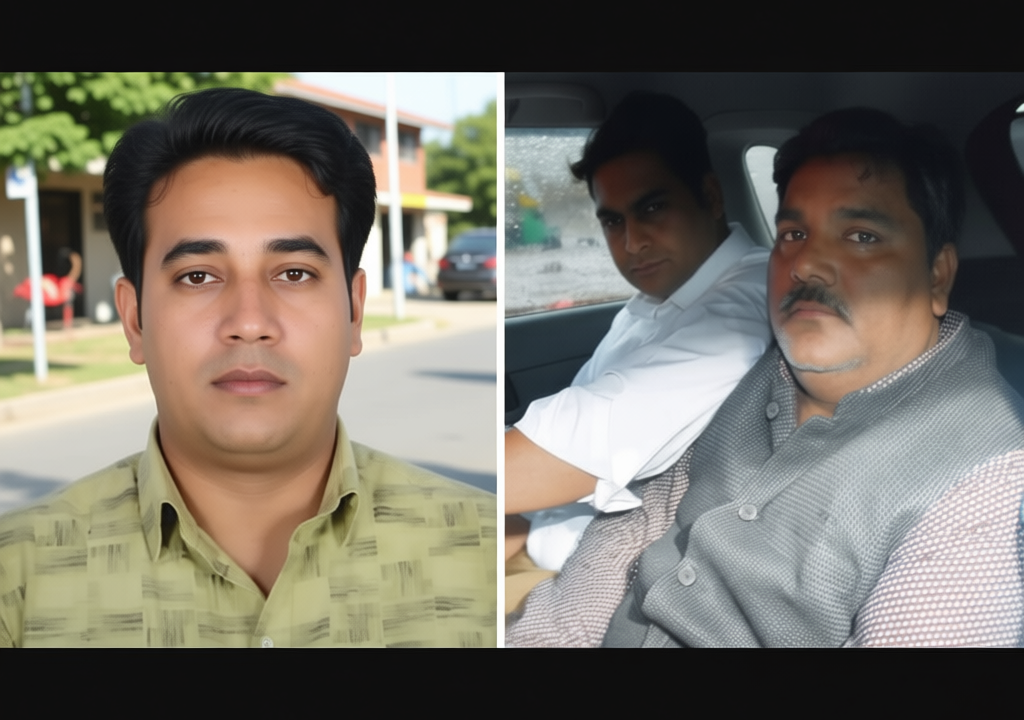
Indiadailyupdate.com – Tahir Hussain, a former Aam Aadmi Party councillor, has expressed confidence that the Delhi High Court will deliver justice following his life imprisonment sentence in connection with the Delhi riots. The trial court on Friday handed down life imprisonment to Hussain and four other accused individuals for the brutal murder of Intelligence Bureau (IB) officer Ankit Sharma during the 2020 Delhi riots. Speaking to media personnel outside the Karkardooma trial court in Delhi, Hussain remained hopeful about his appeal prospects.
Verdict Details and Court Observations
“Justice will come from the High Court. The High Court will give justice; it is not too late,” Hussain declared to reporters. The trial court’s decision came after careful consideration of whether the case warranted the death penalty. Additional Sessions Judge Praveen Singh noted that the case did not fall within the “rarest of rare” category that would justify capital punishment. The court further observed that the prosecution failed to conclusively prove that the convicts were beyond reformation or would continue posing a threat to society in the future.
“The cruelty with which Ankit Sharma was killed, stabbed with knives even after death, the body thrown into a drain—this is certainly the ‘Rarest of Rare’. It is hoped that in the High Court, this life imprisonment will be converted to the death penalty,” Delhi Law Minister Kapil Mishra stated on social media platform X.
Delhi Law Minister Kapil Mishra welcomed the verdict as “the beginning of justice.” He expressed hope that the Delhi High Court would upgrade the life sentences to death penalty, citing the particularly heinous nature of the crime. Mishra emphasized that Ankit Sharma was stabbed multiple times with knives even after death, and his body was callously thrown into a drain by the mob.
Legal Framework and Timeline of Proceedings
Hussain was convicted under multiple sections of the Indian Penal Code, including Section 302 for murder, Section 365 for kidnapping or abducting with intent to secretly and wrongfully confine a person, Section 147 for rioting, Section 148 for rioting armed with a deadly weapon, Section 153A for promoting enmity between different groups, and Section 188 for disobedience to an order duly promulgated by a public servant. These charges were read together with Section 149, which deals with unlawful assembly.
The legal proceedings against Hussain and his co-accused spanned several years. On March 24, 2024, the Delhi court formally framed charges against Hussain and ten other accused individuals under various IPC provisions related to the Delhi riots violence. The trial progressed through multiple stages, with evidence being presented and examined thoroughly by both prosecution and defense teams.
On July 13, 2026, a significant development occurred when six of the co-accused were acquitted by the trial court. This left Hussain and four other accused individuals as the convicted parties in the Ankit Sharma murder case. The acquittals and convictions were based on the court’s assessment of evidence and the strength of prosecution arguments against each individual accused.
The case has drawn considerable attention from legal experts, politicians, and the public due to its connection with the widespread Delhi riots that caused significant loss of life and property. Hussain’s appeal to the Delhi High Court represents the next phase in seeking justice for the victim’s family and addressing the broader implications of the verdict for similar cases arising from the Delhi riots violence.