
ED Pressure or ‘Hitler’ Abhishek Banerjee? Madan Mitra’s Defection Sparks Political Shift in TMC
Indiadailyupdate.com – Recent developments in the Trinamool Congress (TMC) have intensified speculation about whether Kamarhati MLA Madan Mitra’s switch to Ritabrata’s faction stems from pressure by the Enforcement Directorate (ED) or a growing discontent with Abhishek Banerjee’s leadership style. The move has stirred debate within the Mamata Banerjee-led party, with critics questioning the alignment of Mitra’s actions with the party’s core values. This defection marks a pivotal moment in TMC’s internal dynamics, as it signals a potential realignment of power and priorities within the ruling coalition.
Mitra’s Defection: A Bold Political Move
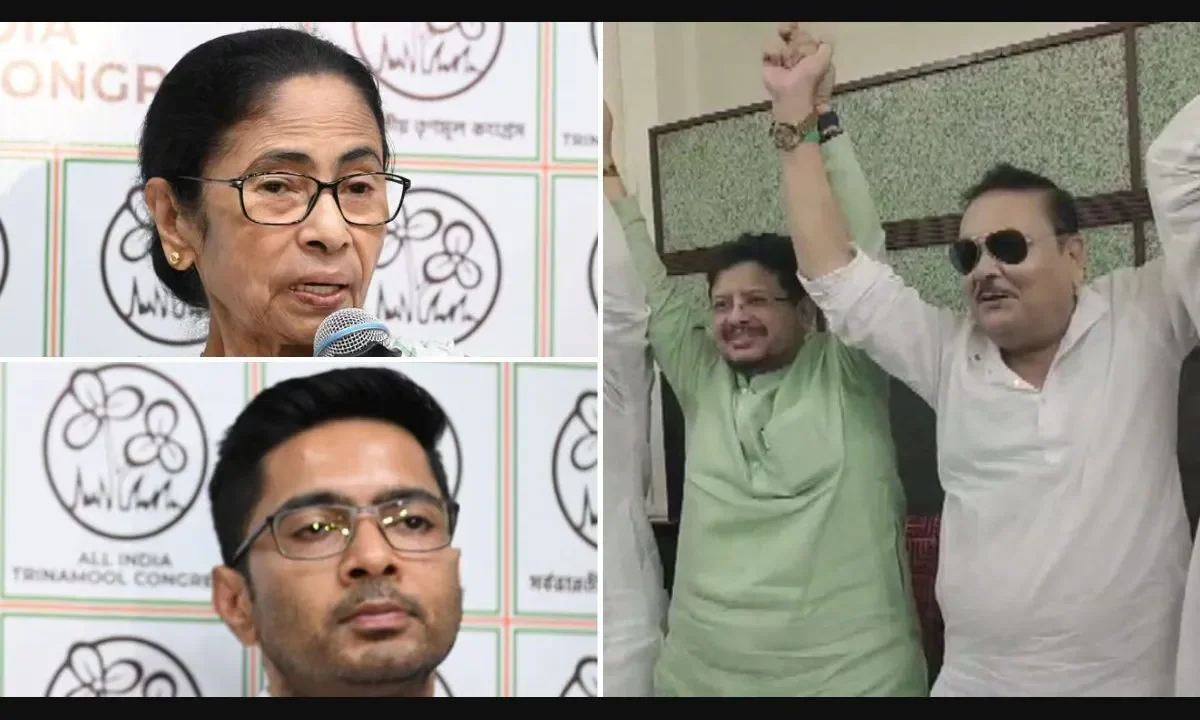
Madan Mitra, a long-time loyalist of Mamata Banerjee, made headlines after resigning from all party posts and publicly aligning with Ritabrata, the Opposition leader in the West Bengal Assembly. His appearance in a white kurta with sunglasses, shortly after sending a WhatsApp apology to TMC’s top leadership, has been seen as a calculated gesture. While Mitra framed his decision as a personal conviction, some observers argue that the timing of his exit raises eyebrows, hinting at a deeper conflict between the ED’s scrutiny and the party’s internal leadership tensions.
“I was in the Trinamool, I stayed in the Trinamool. I just went from this room to that room,” Mitra reportedly said, a statement that has been widely quoted in media reports. This cryptic remark has sparked discussions about whether his shift was driven by external pressures or internal ideological disagreements. Analysts suggest that his choice to join Ritabrata’s faction could reflect a desire to challenge Abhishek Banerjee’s growing influence within the party.
ED’s Role in the Political Landscape
The Enforcement Directorate’s (ED) investigations into corruption and money laundering have become a central theme in West Bengal’s political narrative. Mitra’s family was recently summoned for questioning in a municipal recruitment scam case, adding weight to theories that ED pressure may have played a role in his decision. A senior security official confirmed that the family is set to face further scrutiny next week, linking the timing of Mitra’s resignation to the ongoing probe.
Despite the ED’s involvement, Mitra has insisted that his move to Ritabrata’s camp is not directly tied to the agency’s investigations. “The ED has not forced me to take this step,” he stated in an interview, emphasizing that his choice was driven by personal and political considerations. However, the ED’s growing presence in the state has made it a focal point for politicians seeking to distance themselves from alleged mismanagement or corruption within the TMC.
Abhishek Banerjee’s Leadership Style Under Scrutiny
Abhishek Banerjee, who has emerged as a key figure in the TMC, has faced increasing criticism for his leadership approach. His perceived “Hitler-like” tactics, as Mitra put it, have drawn comparisons to authoritarian governance, fueling discontent among party members. The phrase, which gained traction after Mitra’s public remarks, has been used to highlight his assertive strategies in consolidating power and managing internal dissent.
Mitra’s claims about Abhishek’s leadership style have resonated with some MLAs who have long criticized the younger leader’s dominance in party affairs. Earlier, a group of 60 MLAs had raised concerns about Abhishek’s influence, but Mitra, despite these critiques, had previously held prominent roles such as president of the Dumdum-Barrackpore organisational district. His defection now raises questions about whether these criticisms were overlooked or if they have finally led to a split within the party.
Mamata Banerjee’s Response to the Crisis
Mamata Banerjee swiftly addressed the situation, defending Abhishek’s leadership and dismissing Mitra’s allegations as convenient excuses. “Those who are using Abhishek as an excuse to leave the party are only making excuses,” she said, emphasizing that Abhishek continues to represent the people’s interests. Her remarks underscore the TMC’s efforts to maintain unity despite internal divisions.
The ruling party has also leveraged Mitra’s defection to critique the Opposition’s tactics, suggesting that Ritabrata’s faction is attempting to exploit the situation for political gain. Analysts note that the ED’s role in this episode is likely to be scrutinized closely, as it may influence public perception of the TMC’s governance and the credibility of its leaders. The situation highlights the complex interplay between external investigations and internal party politics.
As the political landscape in West Bengal continues to evolve, Mitra’s defection serves as a case study in the challenges faced by leaders balancing loyalty, ideology, and external pressures. The ED’s investigations and Abhishek’s leadership style have become intertwined in the narrative, with each party using the other to frame its position. The coming weeks will be critical in determining whether this shift signals a broader realignment or a temporary disruption in the TMC’s stability.