
Eggs off the menu? Controversy over school meals in West Bengal intensifies
Indiadailyupdate.com – The recent decision to remove eggs from school mid-day meals in West Bengal has ignited a heated debate across the state. The change, part of a broader revision to the meal program, has sparked concerns among parents, educators, and nutritionists about its impact on children’s dietary needs. With the state government adjusting the cost of meals in primary schools to ₹10 per student, up from ₹6.78, the controversy surrounding “eggs off the menu” has taken center stage. This shift, highlighted by state finance minister Swapan Dasgupta during his budget address, also involves the International Society for Krishna Consciousness (ISKCON) taking charge of meal preparation in Kolkata Municipal Corporation (KMC) schools, raising questions about the nutritional balance and cultural preferences influencing the policy.
Opposition and Parental Fears about Nutritional Impact
Opposition parties have swiftly criticized the move, arguing that removing eggs could compromise the nutritional value of school meals. Trinamool Congress member Derek O’Brien accused the BJP-led administration of favoring vegetarianism to align with political agendas, claiming the policy aims to reduce the inclusion of eggs in mid-day meals as a way to push dietary norms. “After the fish-eating tamasha during the election campaign, the Gujarat Gymkhana finally reveals itself. New BJP govt at work in Bengal. Throw eggs at rivals. But deprive children of nutrition by taking eggs off mid-day meals. Imposing vegetarianism. Bengal rejects this,” he posted on X. Parents and nutritionists warn that eggs are a vital source of protein and essential nutrients, and their absence may affect students’ growth and development, especially in regions where access to diverse food options is limited.
ISKCON’s Role and Uncertainty in the Menu
The International Society for Krishna Consciousness (ISKCON) has clarified that the proposed menu for Kolkata schools has not yet been finalized. Kolkata Vice President Radharaman Das stated, “It has come to my notice that some people are sharing a proposed mid-day meal menu for Kolkata. However, I would like to clarify that no such menu has been finalised, and this list has not been issued by us,” he wrote on X. Despite this, reports indicate that the revised meals may exclude eggs, with Das adding, “Although our meals will not include eggs, there will be no cut in nutrition. We will compensate by serving items like paneer, rajma, and soybeans along with khichdi,” as quoted by The Telegraph. This statement has further fueled the debate, as stakeholders await final details before assessing the full implications of the policy.
Broader Implications for School Nutrition
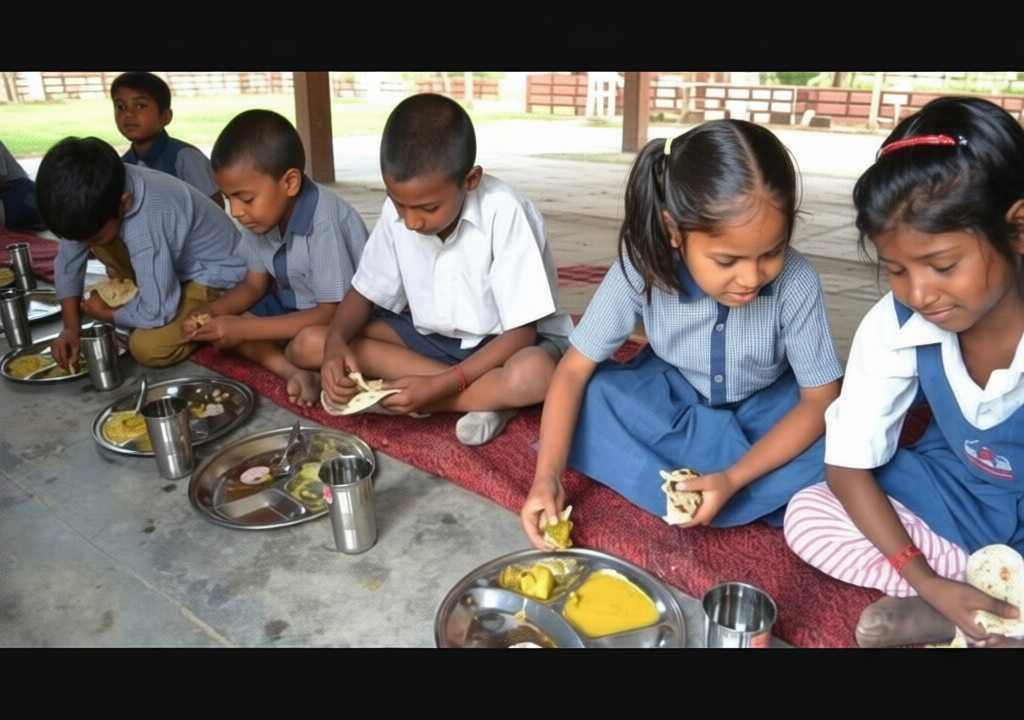
The National Programme on Nutritional Support to Primary Education (NP-NSPE), initiated in 1995 and updated in 2004, has long aimed to ensure students receive balanced meals with specific caloric and protein targets. Under the program, cooked mid-day meals are mandatory for Classes I to V, designed to provide approximately 300 calories and 8–12 grams of protein per serving. Currently, West Bengal schools include eggs once weekly, paired with staples like rice, dal, and potato curry. Critics argue that the shift to alternatives such as paneer and soyabean may not meet the same nutritional standards, particularly in areas where egg consumption is culturally significant. Proponents, however, claim the change addresses cost concerns while maintaining dietary diversity.
Public Response and Student Reactions
Public sentiment has been divided, with many parents expressing worry over the potential reduction in protein intake for their children. A survey conducted by a local education forum found that 68% of respondents believed eggs were a crucial component of school meals, especially for young students. Meanwhile, some schools have reported that children are adapting to the new menu, with no immediate complaints about hunger or energy levels. “My child used to look forward to the weekly egg, but now they’re getting paneer and soyabean instead. It’s a good compromise,” said one parent. However, others argue that the policy could lead to long-term health issues if not carefully managed, emphasizing the need for transparency and scientific validation in the decision-making process.
Future of School Meal Programs in West Bengal
As the controversy surrounding “eggs off the menu” continues, the state government faces mounting pressure to justify its decision. With the revised meal program set to take effect, the focus is now on how effectively ISKCON and other entities will meet the nutritional benchmarks outlined in the NP-NSPE. Analysts suggest that the policy could serve as a model for other states looking to reduce costs while promoting vegetarian options, but it also highlights the challenges of balancing tradition with modern nutritional science. The coming months will be critical in determining whether the changes will improve or worsen the overall quality of school meals, and how the public will respond to this evolving debate.