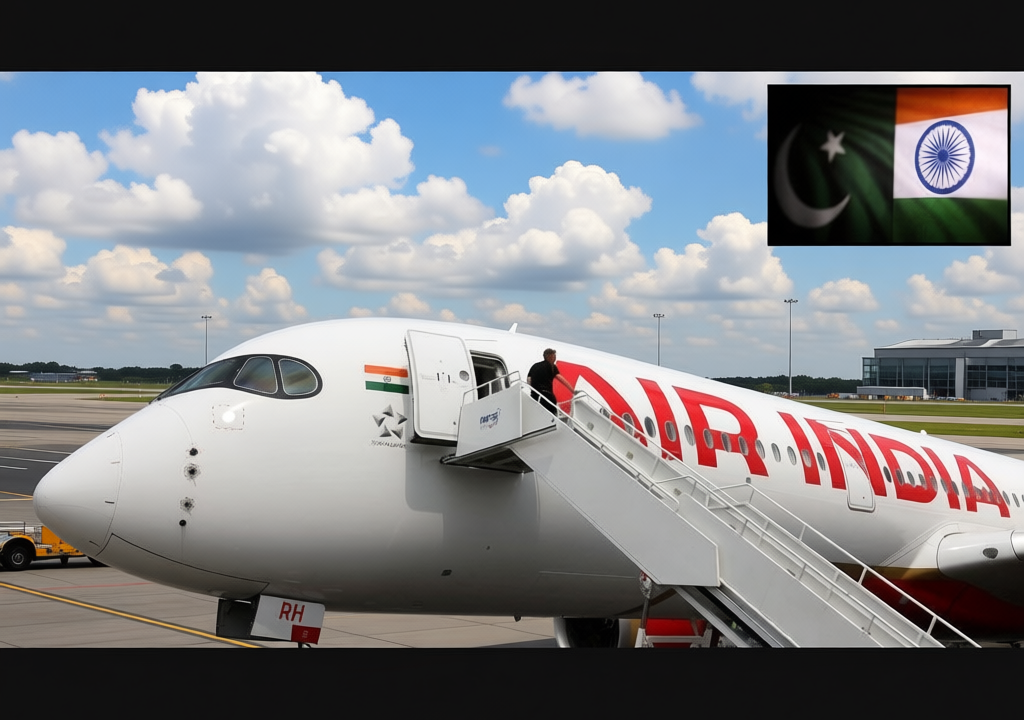

Pakistan’s Response to Air India Flight Entering Its Airspace on June 22: A Detailed Breakdown
Indiadailyupdate.com – How did Pakistan respond when Air India flight AI 479 entered its airspace on June 22? The incident, which unfolded late at night as the aircraft en route to Amritsar crossed into Pakistani territorial airspace, sparked immediate concern in Islamabad. While the exact cause of the deviation remains under investigation, initial reports indicate it may have been due to a technical malfunction. Air India has not yet officially confirmed this, but the event highlights the delicate balance of air traffic management between India and Pakistan, two neighboring nations often at the center of geopolitical tensions.
Immediate Actions by Pakistani Authorities
Upon detecting the Air India flight’s unauthorized entry, Pakistan’s air traffic control operators swiftly initiated contact with Indian aviation authorities. This coordinated effort ensured that the situation was contained without causing a major disruption. Islamabad’s response was measured, focusing on safety protocols rather than punitive measures. The incident occurred near the Amritsar airport, a location that has historically been a focal point of airspace disputes due to its proximity to the Line of Control in Kashmir.
“Our air traffic control team promptly identified the anomaly and communicated it to the Indian side to ensure a smooth resolution,” said a statement from the Pakistan Civil Aviation Authority, as reported by The News. “The safety of passengers and crew was the top priority.”
Historical Context of Airspace Restrictions
The airspace breach on June 22 is part of a broader pattern of tensions between India and Pakistan, which have often led to restrictions on air travel between the two countries. These restrictions are typically imposed during heightened diplomatic conflicts, such as the 2025 Pahalgam attack in Jammu and Kashmir, which resulted in the loss of 26 lives. Following this event, Islamabad extended its airspace ban on Indian flights for an additional month, effective until July 24. India, in turn, imposed similar limitations on Pakistani air traffic, further straining bilateral relations.
Experts note that such restrictions are not uncommon, as both nations have used airspace control as a tool to exert pressure during periods of conflict. The June 22 incident, however, occurred under relatively calm conditions, raising questions about whether the breach was intentional or a result of operational errors. This context underscores the significance of the event in the ongoing narrative of India-Pakistan air diplomacy.
Technical and Operational Implications
The Air India flight’s brief incursion into Pakistani airspace prompted a thorough technical review by both Indian and Pakistani aviation authorities. Investigators are examining the aircraft’s navigation systems and communication logs to determine if a software glitch, pilot error, or mechanical failure led to the deviation. Flight AI 479 was allowed to return to Delhi without any major incident, but the delay in its departure for Amritsar raised concerns about the efficiency of cross-border air traffic protocols.
Analysts suggest that such close calls can serve as reminders of the vulnerabilities in shared airspace management. While the incident itself did not escalate into a larger conflict, it highlighted the need for improved coordination between the two countries. Pakistan’s swift response, coupled with its adherence to international aviation standards, demonstrated a commitment to maintaining safety, even during periods of political friction.
Diplomatic and Strategic Considerations
Despite the incident, diplomatic relations between India and Pakistan remained stable, with both sides prioritizing dialogue over confrontation. This approach is crucial, as airspace breaches can easily be perceived as symbolic acts of aggression. The incident on June 22, however, was treated as a routine operational matter, reflecting the maturity of the bilateral air traffic management system. Nevertheless, it serves as a case study for how minor aviation incidents can carry broader strategic implications in a context of ongoing tensions.
Key officials from both nations have emphasized the importance of maintaining open channels of communication to prevent such incidents from becoming flashpoints. The event also prompted discussions about the need for enhanced training for pilots and air traffic controllers, particularly in high-risk regions like the border areas between India and Pakistan. As the investigation continues, the focus remains on resolving the issue and strengthening mutual trust in aviation cooperation.
Conclusion: Lessons from the June 22 Incident
The June 22 airspace incident between Air India and Pakistan underscores the complex interplay of technology, protocol, and geopolitics in air travel. While the immediate response was effective in ensuring safety, the event highlights the challenges of managing shared airspace under diplomatic stress. For now, the focus is on understanding the root cause and implementing preventive measures. As the two nations continue to navigate their relationship, such incidents will remain a test of their ability to balance national security with international cooperation.