
Hyderabad Woman Accuses Oman of Forced Labor and Abuse
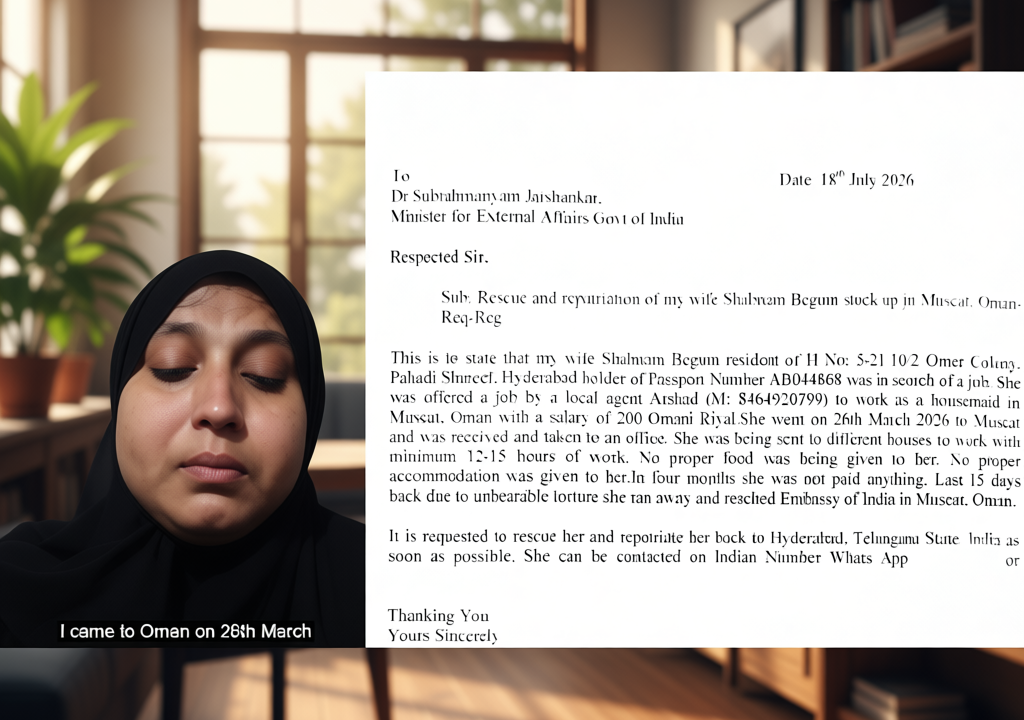
Indiadailyupdate.com – A 26-year-old woman from Hyderabad, Shabnam Begum, has come forward with a harrowing account of her experiences as a domestic worker in Oman. She alleges that she was subjected to physical abuse and forced to work 12 to 15 hours daily without pay for three months. Shabnam had initially traveled to Muscat after being promised a domestic worker position by a local recruitment agency, but her reality soon diverged sharply from the assurances she was given. The Hyderabad woman alleges abuse, forced work, and systemic exploitation, shedding light on the challenges faced by migrant laborers in the Gulf region.
The Journey and Initial Promises
Shabnam Begum’s journey began on March 26, when she signed up with a recruitment agency that assured her of employment as a housemaid in Oman. She was told she would work in a private household, receive a fair wage, and have access to basic amenities. However, once she arrived in Muscat, her employers began subjecting her to grueling labor without compensation. The Hyderabad woman alleges abuse, forced work, and a lack of basic human rights, which she claims were violated from the outset.
“They also didn’t give me a mobile phone for a month and a half,” she said in the video, which was shared with Hyderabad politician Amjed Ullah Khan and leader of the Majlis Bachao Tehreek. “I couldn’t contact my family or even call for help.”
Shabnam’s ordeal reportedly included long working hours, inadequate food, and harsh treatment by her employers. She described being physically abused and denied rest, with her salary withheld for over three months. According to her account, the conditions were so severe that she felt trapped, unable to leave her job without the risk of being sent back to India without proper compensation.
Escalation and Institutional Response
Amjed Ullah Khan, who took up Shabnam’s case, shared details of her plight in a recent post, emphasizing the extent of the abuse and forced work. He noted that Shabnam was reportedly assigned to multiple households, working non-stop for 12–15 hours each day without any wages. Her family had reached out to External Affairs Minister S Jaishankar for support, and the Indian Embassy in Muscat confirmed it had acknowledged the case and was investigating further.
Shabnam managed to flee to the Indian Embassy after months of mistreatment, but her employers allegedly seized her passport, leaving her stranded. This incident has raised questions about the effectiveness of labor protection mechanisms in Oman and the role of recruitment agencies in exploiting migrant workers. The Hyderabad woman alleges abuse, forced work, and a lack of transparency in the hiring process, which many similar cases have highlighted.
Broader Implications for Migrant Workers
Shabnam’s story is part of a larger pattern of labor rights violations faced by domestic workers in the Gulf region. Reports from international labor organizations indicate that many migrant workers, particularly women, are often subjected to forced labor, physical abuse, and restricted freedom of movement. The Hyderabad woman alleges abuse, forced work, and systemic issues within the Omani labor system that leave workers vulnerable to exploitation.
Her case has sparked renewed discussions about the need for stronger legal protections for domestic workers. Advocacy groups have called for stricter regulations on recruitment agencies and better oversight of labor conditions in Oman. Shabnam’s experience underscores the importance of ensuring that migrant workers are not only hired but also treated fairly and given the right to seek justice when abuses occur.
Legal and Humanitarian Concerns
The Indian Embassy has acknowledged Shabnam’s case, with officials stating they are working to resolve it at relevant levels. However, critics argue that more needs to be done to address the root causes of forced labor and abuse in Oman. Shabnam’s ordeal highlights the challenges faced by domestic workers, who often work in isolated environments and have limited recourse against their employers.
Human rights organizations have urged the Indian government to take a stronger stance in protecting its workers abroad. They emphasize that the Hyderabad woman alleges abuse, forced work, and a lack of legal safeguards, which can leave victims in a precarious situation. Shabnam’s case also raises questions about the role of the recruitment agency in facilitating her exploitation and the need for greater accountability in the hiring process.
As the investigation continues, the Hyderabad woman’s allegations have drawn attention to the plight of domestic workers in the Gulf. Her story serves as a powerful reminder of the vulnerabilities faced by migrant laborers and the urgent need for improved labor conditions. With her case gaining traction, there is hope that it will lead to broader reforms and greater awareness of the issues affecting workers like Shabnam in Oman.