Is Bullet Train Project Delay Entirely India’s Fault? MEA Defends Project Progress
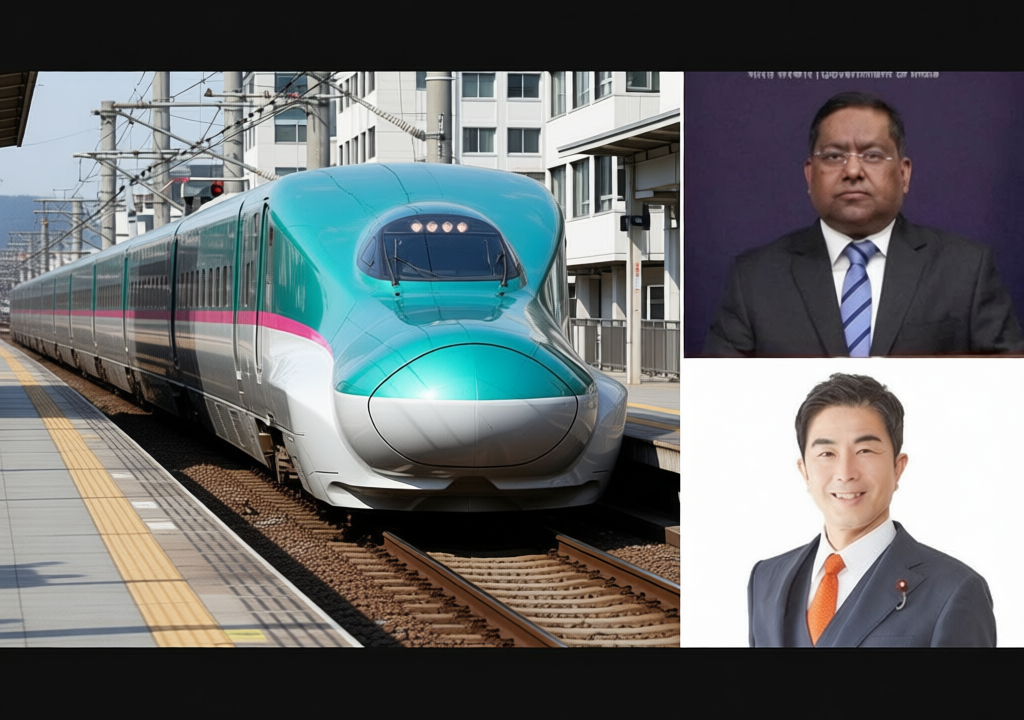
Indiadailyupdate.com – Is bullet train project delay entirely India’s fault? The Ministry of External Affairs (MEA) has addressed claims by a former Japanese minister who accused New Delhi of causing delays in the Shinkansen project, a high-speed rail initiative between India and Japan. Hideki Makihara, Japan’s former Justice Minister, recently expressed concerns about the setbacks in the Mumbai-Ahmedabad High-Speed Railway (MAHSR) project, arguing that India had failed to meet its commitments. His comments, shared on social media, sparked a debate on the responsibilities of both nations in the development of this flagship infrastructure endeavor.
Clarifying the Project’s Current Status
The MEA spokesperson, Randhir Jaiswal, refuted Makihara’s assertion, stating that the Shinkansen project was “progressing well” despite the criticism. He emphasized that the delay was not a reflection of India’s overall commitment but rather a result of factors beyond its control, such as technical challenges and logistical complexities. Jaiswal also highlighted that Japan continues to support the initiative, with the E10 series trains—key components of the project—expected to be delivered in the early 2030s once their development is finalized.
Makihara’s remarks, however, painted a more critical picture. In a post on X, he claimed that the Indian delegation had shown “sheer recklessness” in international meetings, prioritizing domestic interests over the project’s timelines. His argument was supported by a Yahoo Japan article that alleged recent talks had not met expectations, with Japan’s side feeling overlooked in critical decision-making processes.
Project Timeline and Equipment Decisions
The MEA clarified that Japan had not yet offered a specific signaling system for the project, as the choice was made based on international standards. This decision, according to officials, was part of a broader effort to ensure the project’s technical and operational efficiency. The first phase of the MAHSR, which includes a 508-kilometer stretch from Mumbai to Ahmedabad, is slated for completion by 2027. Once operational, the line is expected to reduce travel time between the two cities from seven hours to just one hour, significantly boosting connectivity and economic activity in the region.
Despite Makihara’s criticism, the MEA stressed that the collaboration between India and Japan remains strong. The recent high-level talks, held from July 1 to 3, included a visit by Japanese Prime Minister Sanae Takaichi to Indian Prime Minister Narendra Modi during the Japan-India Economic Forum. This engagement underscored the mutual interest in advancing the project and addressing any concerns promptly. The Japanese government has also expressed confidence in India’s ability to deliver on its promises, with officials highlighting the potential of the MAHSR to revolutionize transportation in the country.
Challenges and Controversies in the Project
The bullet train project has faced several hurdles since its inception, including land acquisition issues, environmental clearances, and funding challenges. These problems, while significant, have been attributed to the complexity of implementing a high-speed rail system in a diverse and densely populated country like India. The MEA pointed out that the project’s progress has been consistent with the agreed-upon timeline, and any delays have been managed through close coordination with Japanese technical experts.
Makihara’s claim that the delay was “entirely” India’s fault has been met with skepticism by some analysts. They argue that while India has taken its time in finalizing certain aspects, such as the signaling system, the project’s overall framework has been largely adhered to. Additionally, the involvement of Japanese companies like Hitachi, which has been instrumental in providing the technology and expertise, has been a key factor in the project’s development. The MEA also noted that the project is a joint venture, requiring alignment between both nations’ priorities and capabilities.
Bilateral Ties and Future Prospects
The Shinkansen project serves as a symbol of the growing economic and strategic partnership between India and Japan. Since the initiative was launched in 2017, the two countries have engaged in multiple discussions to ensure its success. The recent talks reaffirmed the commitment to this collaboration, with both sides acknowledging the importance of overcoming challenges together. The MEA highlighted that the project’s progress is a testament to the ongoing diplomatic efforts and the shared vision of modernizing India’s infrastructure.
Looking ahead, the completion of the first segment of the MAHSR is seen as a critical milestone. Once operational, the line will not only set a benchmark for high-speed rail in India but also position the country as a leader in sustainable transportation. The project is expected to create thousands of jobs and stimulate economic growth in the regions it connects. While Makihara’s critique has raised questions about India’s management of the initiative, the MEA remains optimistic about its long-term benefits and the strength of the India-Japan partnership.