KTR Faces Political Heat Over Bliss Project Encroachment
Indiadailyupdate.com – KTR is experiencing renewed political pressure following the recent scrutiny of the Bliss residential project in Hyderabad, which has been accused of encroaching on the buffer zone and the full tank level area of Hussain Sagar Lake. The Telangana government’s intervention has brought the case to the forefront of public and political discourse, as the project’s location on Raj Bhavan Road in Somajiguda has raised concerns about the misuse of public land. Officials have highlighted that 7,355.15 square metres of the project’s site lie within the lake’s protected limits, with an additional 285.74 square metres overlapping the mandatory 30-metre buffer zone, leaving no land available for construction. This has intensified questions about the project’s legality and its implications for environmental conservation.
Political and Environmental Fallout
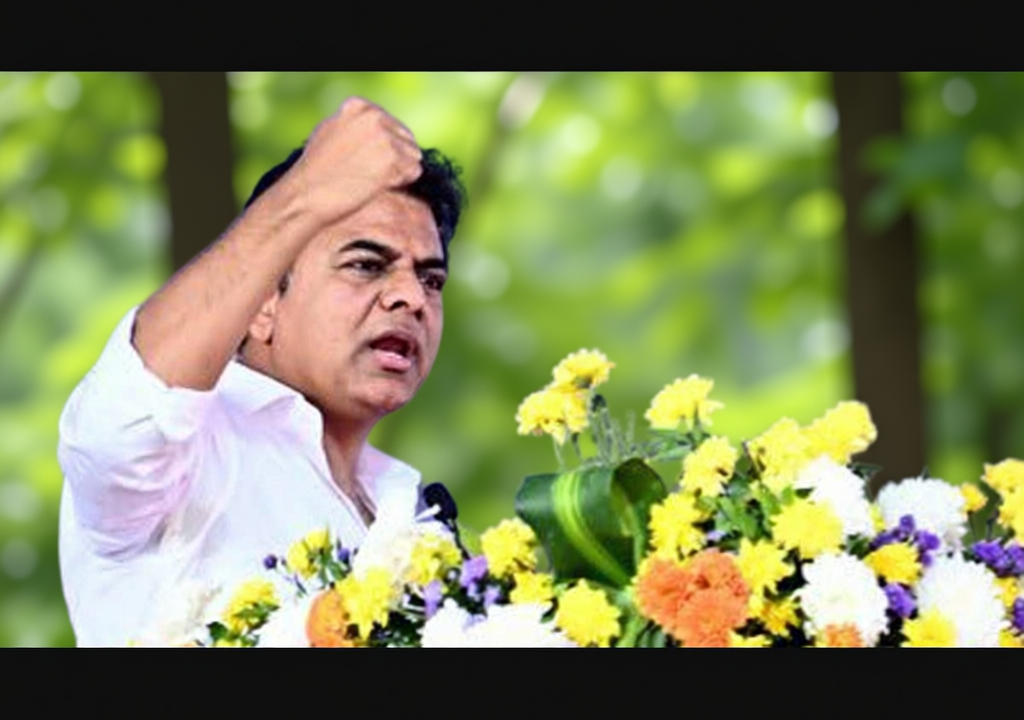
The Bliss project has become a political flashpoint due to its connection to B. Pradeep Reddy, a close associate of K.T. Rama Rao, the leader of the Telangana Rashtra Samstryam (BRS). This ties the encroachment case directly to KTR’s administration, exacerbating tensions as the project is now viewed as a symbol of alleged regulatory laxity. The controversy also underscores growing concerns about the impact of urban development on Hussain Sagar Lake, a vital water body in Hyderabad that serves as a source of drinking water and a habitat for aquatic life. Environmentalists have criticized the project for threatening the lake’s ecological balance, arguing that the encroachment could lead to long-term damage to the water ecosystem.
With the Telangana government now under fire for approving the project, KTR faces mounting pressure to address the issue. Critics suggest that the encroachment is part of a broader pattern of development encroaching on protected areas, which has drawn comparisons to the Janwada farmhouse controversy. The chief minister, A. Revanth Reddy, previously accused the BRS of misusing the farmhouse to conceal ownership, a claim that KTR has denied by asserting it was leased from Pradeep Reddy.
Legal Proceedings and Regulatory Oversight
Following a collaborative inspection by the Irrigation and CAD Department, the Hyderabad Disaster Response and Assets Monitoring and Protection Agency (HYDRAA) issued a public notice detailing the encroachment. The Greater Hyderabad Municipal Corporation (GHMC) has since moved to cancel the project’s building permissions, which were granted in 2018 and 2020. These permissions, officials allege, were secured through misleading claims and incomplete documentation, raising questions about the adequacy of the approval process. The GHMC has also suspended the project’s occupancy certificate application, citing the need for further verification of its compliance with environmental and land use regulations.
The Hyderabad district collector confirmed that the land in question is classified as “Vacant land, Tank Submerged” in the Town Survey Land Register. This classification implies that the area was designated for conservation purposes and not for residential development. The absence of a No Objection Certificate (NOC) from the relevant authorities has further fueled allegations that the project was approved without proper oversight. Legal experts suggest that the case could set a precedent for holding developers accountable for encroachments on critical water bodies, particularly in the context of the city’s rapid urbanization.
Opposition Leverage and Public Backlash
The Congress-led opposition has seized on the Bliss project as a key tool to challenge KTR’s government, framing it as evidence of environmental negligence and political opportunism. By linking the encroachment to a close ally of KTR, the opposition aims to spotlight the administration’s alleged failure to enforce regulations on public lands. This has sparked a wave of public backlash, with residents and activists demanding stricter scrutiny of such developments. Social media platforms have amplified the discourse, with many highlighting the potential consequences of allowing residential construction on the lake’s buffer zone, including reduced water storage capacity and increased pollution.
The legal battle surrounding the project is ongoing, with multiple civil and writ petitions pending before the City Civil Court and Telangana High Court. These petitions seek to either revoke the project’s approvals or compel the authorities to take corrective action. The case has also prompted calls for a comprehensive review of all residential projects near Hussain Sagar Lake, with some experts warning of the long-term risks to the city’s water resources. For KTR, the Bliss project represents a critical test of his administration’s commitment to addressing environmental issues, as the political heat intensifies.
Broader Implications for Urban Development
The encroachment on Hussain Sagar Lake has reignited debates about the balance between urban expansion and environmental protection in Hyderabad. While the city has seen a surge in real estate projects, the Bliss case highlights the need for more rigorous enforcement of land use laws. Urban planners and environmentalists argue that such encroachments not only threaten water bodies but also undermine the city’s resilience to climate challenges, including water scarcity and flooding. The case has prompted discussions about revising policies to ensure that future developments are aligned with sustainable urban planning principles.
As the legal proceedings unfold, the Bliss project is expected to have far-reaching consequences for the real estate sector in Telangana. If the encroachment is successfully challenged, it could lead to the revocation of approvals for similar projects, setting a new standard for accountability. For KTR, the case serves as a reminder of the scrutiny his government faces in managing Hyderabad’s infrastructure and environment. The political heat is likely to persist, with opposition parties and civil society groups closely monitoring the outcome to determine its impact on the broader governance landscape.