India Rejects Pakistan’s ‘Look Inwards’ Claim in Karachi Attack
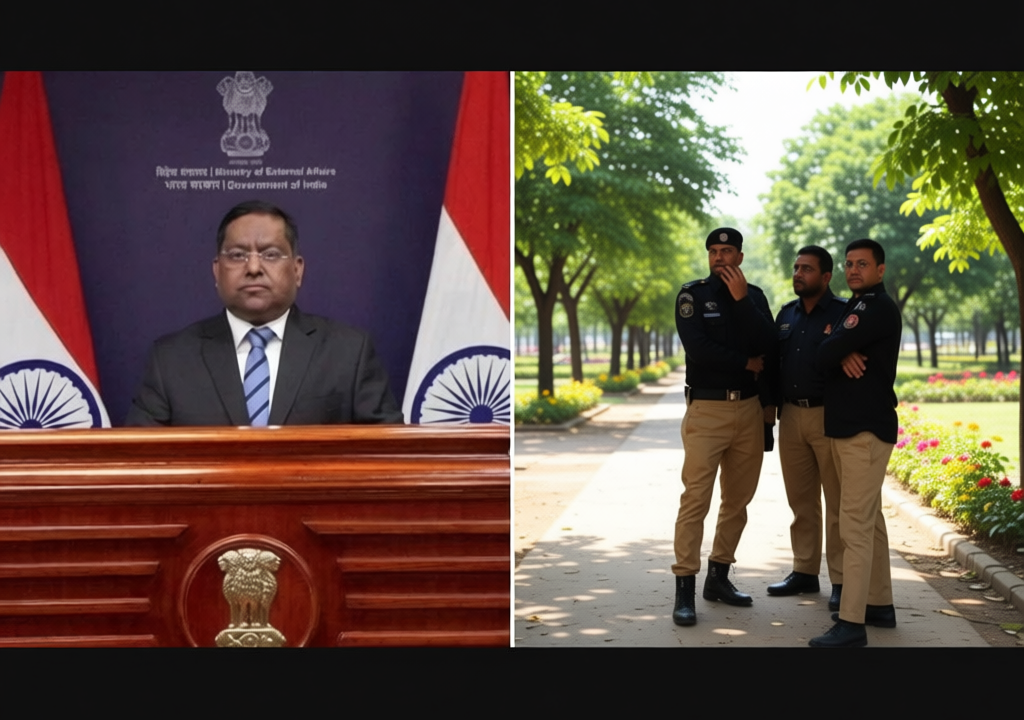
Indiadailyupdate.com – India has firmly dismissed Pakistan’s allegations that it was involved in a major attack on a Karachi Rangers camp, which resulted in the deaths of six individuals and injuries to others. In a clear and assertive statement, the Ministry of External Affairs (MEA) spokesperson, Randhir Jaiswal, emphasized that Pakistan should “look inwards” and focus on internal security rather than blaming external forces. The attack, which occurred on [date], has reignited diplomatic tensions between the two neighboring nations, as Islamabad accuses New Delhi of covert support for militant groups operating in the region.
Attack Details and Culprits Identified
“Rather than casting blame on others, Pakistan must examine its own strategies and take firm action against terror networks within its borders,” Jaiswal stated in a social media post. This came as the attack on the Gulistan-e-Jauhar facility in Karachi, a key military installation, left three security personnel dead and four others injured. The incident, which was attributed to the Jamaat-ul-Ahrar (JuA)—a faction of the banned Tehreek-e-Taliban Pakistan (TTP)—unfolded when militants detonated explosives at the compound’s entrance. According to an ISPR report cited by Geo News, the attackers then attempted to breach the premises, leading to a fierce confrontation that claimed the lives of three JuA operatives and resulted in the capture of an Afghan man in a wounded state.
The assault is believed to have been carried out by JuA, a group that has been active in the Khyber Pakhtunkhwa region and is known for targeting civilians, security forces, and government institutions. The attack underscores the persistent threat of militant groups operating in Pakistan, despite recent efforts to curb their influence. With the nation grappling with security challenges, the MEA’s response highlights a strategic push to shift the narrative from external blame to internal accountability.
Political Implications and Diplomatic Tensions
While India’s denial of involvement has been met with some relief, Prime Minister Shehbaz Sharif of Pakistan has continued to accuse India of using “proxies” to destabilize his country. The leader, however, has not provided substantial evidence to substantiate these claims, leaving room for debate. Analysts suggest that the accusation may be part of a broader effort by Islamabad to deflect attention from its own security failures and to strengthen its narrative on the issue of cross-border terrorism.
India’s stance aligns with its broader strategy of promoting regional stability through dialogue and cooperation. The country has been a key partner in counterterrorism initiatives in South Asia, including joint operations against groups like the TTP. Yet, the latest attack has exposed the complexities of the region’s security landscape, where external alliances and internal dynamics often intersect. The MEA’s call for Pakistan to “look inwards” is not just a political maneuver but a plea for a unified approach to combating extremism.
Historically, Pakistan has faced criticism for its role in harboring militant groups and allowing them to operate within its territory. The attack on the Karachi Rangers camp serves as a reminder of the ongoing challenges in this regard. While India’s denial is crucial for maintaining its credibility, the incident also highlights the need for a comprehensive strategy that addresses the root causes of terrorism, such as economic disparities and political grievances within Pakistan.
International observers have noted the strategic importance of the “look inwards” message, as it positions India as a responsible actor in the region. The statement also underscores the importance of transparency and evidence-based diplomacy. As the attack investigation continues, both nations will likely use the incident to bolster their narratives in regional and global forums. This episode is expected to fuel further discussions on the need for coordinated efforts to combat terrorism, with India advocating for a focus on Pakistan’s internal capabilities and Pakistan seeking support for its cross-border operations.
Amid the rising tensions, the broader implications of the attack extend beyond immediate diplomatic discourse. It has reignited debates on the effectiveness of Pakistan’s counterterrorism measures and the role of external actors in regional security. The MEA’s insistence on “look inwards” has been met with mixed reactions, with some analysts praising its clarity and others questioning its impact on the ongoing dialogue. As the situation evolves, the focus keyword “look inwards” will likely remain central to the discourse, serving as a rallying point for both nations to assert their positions in the fight against terrorism.