Kerala: Non Muslims in Waqf Board Triggers Political Row
Leaders Clash Over Board Composition and Court Orders
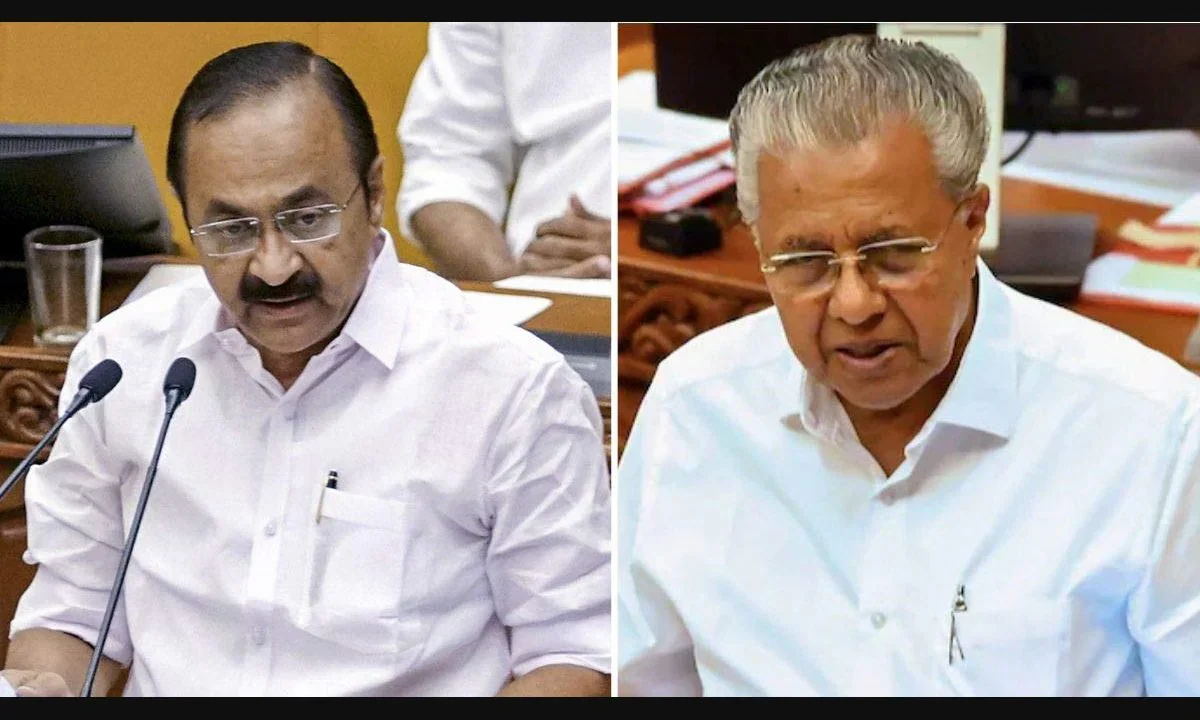
Indiadailyupdate.com – A fierce political battle has erupted in Kerala over the inclusion of Non Muslims in Waqf Board appointments. Opposition leader Pinarayi Vijayan recently accused the V.D. Satheeshan government of attempting to bring non-Muslim representatives into the religious body. In his Wednesday response, the Chief Minister dismissed Vijayan’s claims as a “communal campaign” aimed at creating anti-Muslim sentiment while simultaneously attacking the UDF and the ruling administration.
The controversy stems from the Kerala Waqf Board’s formation under the Unified Management, Empowerment, Efficiency and Development (UMEED) Act. This legislation amended the Waqf Act of 1995 after changes were passed in April 2025. Satheeshan argued that the previous LDF administration had already confirmed in its official notification that two non-Muslim members would join the board. However, former law minister and CPI(M) leader P. Rajeeve countered that the Chief Minister was misrepresenting the earlier government’s position.
High Court and Supreme Court Interventions
This political dispute began in February 2026 when the LDF government started forming the Kerala Waqf Board under the UMEED framework. While the revised law mandated two non-Muslim members, officials appointed only nine Muslim representatives, intentionally leaving two positions vacant for later filling. Legal challenges soon followed, with petitioners contending that the required non-Muslim representation was absent.
On July 15, the Kerala High Court halted the Waqf Board from taking major decisions while the constitutional issue remained pending. The court observed that the Board seemed to violate Section 14 of the UMEED Act. The judiciary also recorded the state government’s readiness to reorganize the Board as per legal requirements. Pending a final verdict, the High Court barred policy decisions and capital expenditure without judicial consent, placing the Board under the Joint Secretary for Waqf affairs.
On July 21, just six days later, the Supreme Court reversed only the supervisory mechanism created by the High Court, allowing the Board to function without bureaucratic oversight. The apex court upheld other interim restrictions and directed the High Court to expedite the case resolution.
Government’s Legal Defense and Future Plans
The Kerala administration has filed an affidavit with the High Court confirming that the Board will be reconstituted fully in line with Section 14 of the UMEED Act. Satheeshan defended his government’s strategy by pointing out that the former LDF administration had already acknowledged the need to appoint two non-Muslim members.
The notification states: “The appointment of the remaining one member under clause (d) and one member under clause (f) of sub-section (1) of Section 14 of the Act shall be made shortly.”
According to Satheeshan, the February 2026 notification clearly indicated that appointments under clauses (d) and (f) of Section 14(1) would happen soon. He clarified that delays occurred due to simultaneous Bar Council elections. Clause (d) covers individuals with expertise in finance, business management, and social work, while clause (f) reserves a seat for a State Bar Council representative.
With nine Muslim members already serving on the Board, the amended legislation required the two remaining vacancies to be filled by Non Muslims in Waqf Board positions. The LDF government opted to keep both slots empty, pledging future appointments. Satheeshan maintained that by formally committing to fill these two statutory categories, the previous administration implicitly accepted that the new appointees would necessarily be non-Muslims.
The Chief Minister further stated that his government had informed the High Court about its plan to examine petitioners’ concerns, restructure the Board legally, and seek dismissal of the pending cases. He also mentioned that the Waqf Board had expressed willingness to cooperate with the judicial process to resolve the matter swiftly.