When the System Fails Its Children: A Nation’s Grief
The Weight of a Broken Promise
Indiadailyupdate.com – It wasn’t an explosion or a military takeover that marked the end of something vital. The moment arrived quietly, with a fifty-nine-year-old man being hoisted from the pavement by uniformed officers. He could barely remain upright. For twenty days he had refused sustenance, awaiting a response from those in authority. Their reply came in the form of grasping hands beneath his arms, hauling him away from the sole venue where his voice still carried weight.
White cloth cannot conceal institutional collapse. Across the country, a mother carefully selects garments for a trunk destined for her child who will never depart for university. She is not preparing for orientation week—she is choosing attire for a funeral. This represents the true price of the NEET examination controversy. Beyond the headlines and accusations lies a young life.
A teenager who studied until 2 AM for months, who promised their parents they would make them proud; who trusted that the system meant to test their knowledge wasn’t already rigged against them before they picked up the pen.
When that confidence shattered, some young people could not bear the burden. This is what accountability truly means—not political maneuvering, but human sorrow.
Starvation as Protest
What actions did the guardians of these young citizens take? They shuffled paperwork and declared victory. A supplementary examination here, a legal petition there, a hearing for an accused individual who will likely remain unknown to the public. Yet not a single official stepped down. No minister faced a camera to declare, “I failed you, and I’m sorry.” Instead, bureaucracy wrapped itself around silence, trusting that public attention would fade before grief did.
Sonam Wangchuk’s hunger strike was not born of convenience. He endured twenty days without nourishment because conventional methods had failed to stir his government’s conscience. When his physical strength finally waned and the only remaining option was removal, they executed exactly that—carrying him away as though his deteriorating body constituted the problem rather than the two million futures still seeking resolution.
The Silence of the Press
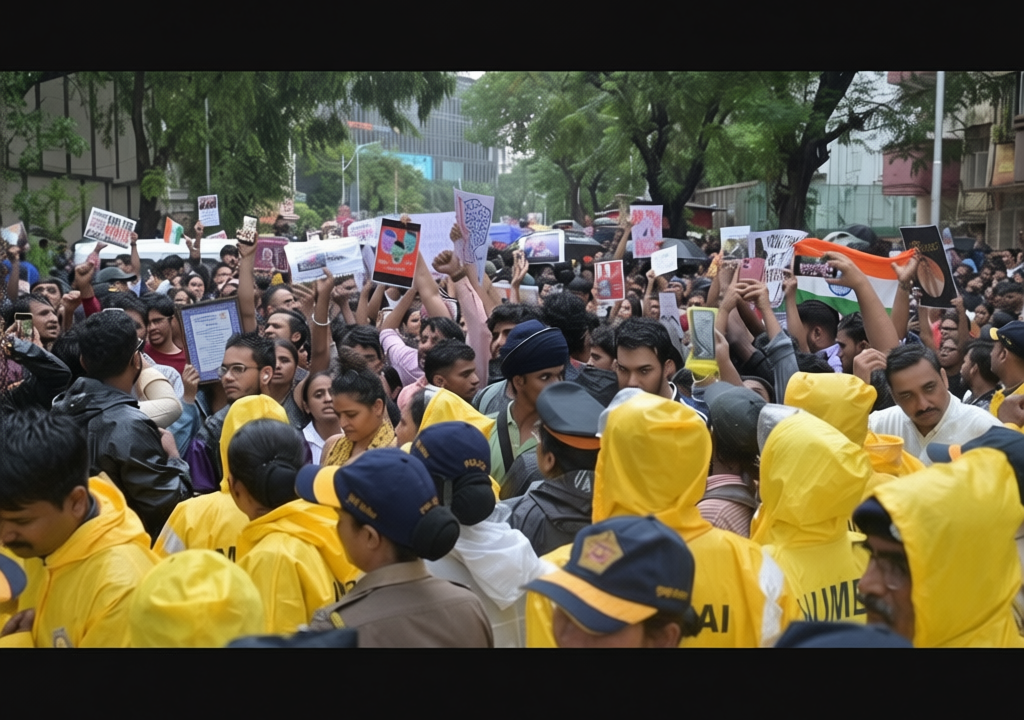
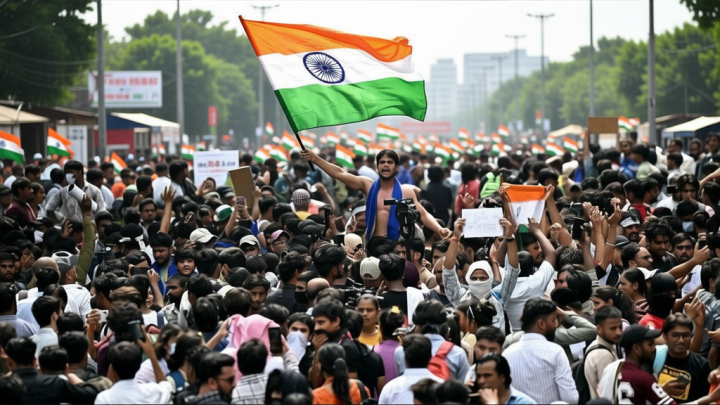
Consider how recently this appeared in mainstream media. Not a theatrical argument masquerading as discussion, but genuine reporting on the nation’s most substantial demonstration. Day after day at Jantar Mantar, while television networks accommodate every topic except this one. A news organization that withdraws during its most significant story is not impartial. It has already determined which suffering deserves public consideration.
Expressing concern about these matters has grown perilous. Demanding a reliable examination framework earns you the label “anti-national.” Requesting dignified treatment for a hospitalized elder transforms you into “left-wing propaganda.” When did compassion for a deceased adolescent become an affront to patriotism?
If loving India means staying quiet while it fails its own children, then that was never love to begin with—it was fear wearing love’s clothes.
A Generation Watches
This conflict never concerned animosity toward particular groups. Religion, caste, voting history—none of these defined the struggle. The core inquiry remains straightforward yet devastating: why does pain only register when accompanied by the appropriate credentials?
A administration claiming representation for 1.4 billion citizens cannot arbitrarily determine which of those citizens merit mourning. The youth have been observing. Every evasion, every hollow response, every parent denied closure—they witnessed it all unfold. Patience served them well, for they were taught that forbearance characterizes responsible citizenship. But forbearance has limits when met with stretchers and silence.
You will not perceive it approaching. You will only recognize it once it has arrived, and by then no vehicle, no medical transfer, no white cloth will suffice. A man should not require starvation in public spaces for his government to acknowledge its failures. He underwent that ordeal. His body now refuses to continue.
If this does not stir you, or if a mother preparing a coffin rather than a university trunk fails to move you, then consider what might actually be necessary.
The author is a BA LLB (Hons) student at MLS, Manipal University, Bengaluru. The opinions expressed in this article are those of the author and do not purport to reflect the opinions or views of THE WEEK.