Shashi Tharoor Proposes Aadhaar as Citizenship Proof to Address MEA’s Passport Issue
MP Challenges Government’s Stance on Passport and National Identity
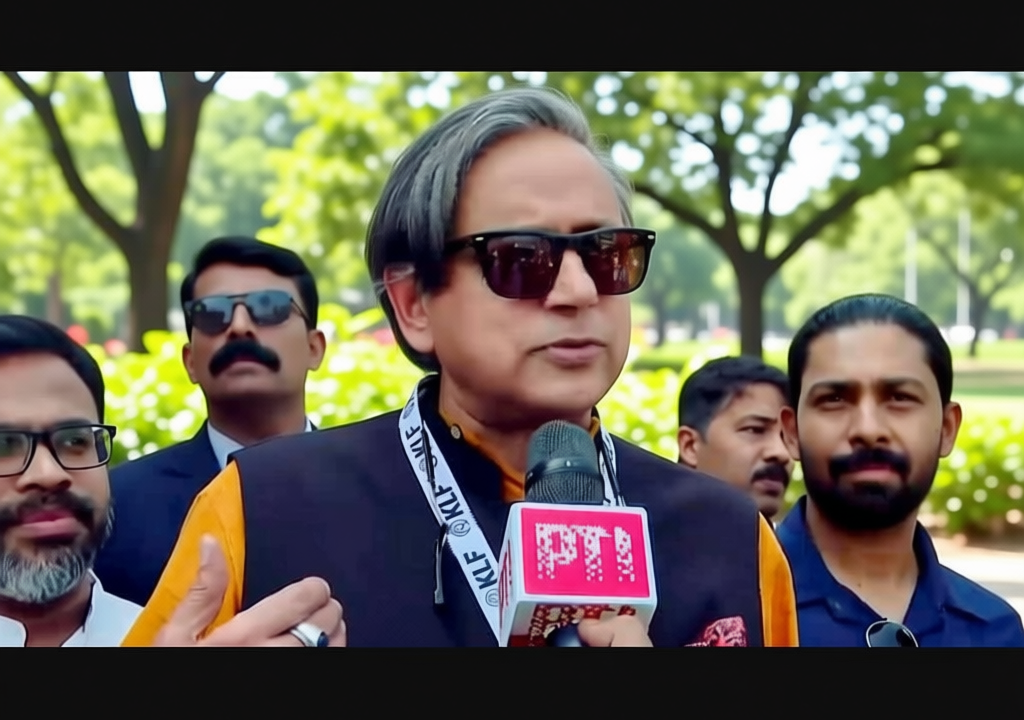
Indiadailyupdate.com – On June 26, 2026, Congress MP Shashi Tharoor presented a compelling argument against the Ministry of External Affairs’ (MEA) recent declaration that the passport is not a definitive proof of citizenship. He emphasized that this stance creates a logical inconsistency, as the passport is universally accepted as a key identity document. Tharoor pointed out that the rigorous process of obtaining a passport is designed to establish citizenship, yet the government now claims it does not serve as such. His proposal calls for a reevaluation of the document policy to align with the broader recognition of passports as citizenship proof.
The MEA had clarified that passports function primarily as travel documents, not as conclusive evidence of nationality, citing the Passport Act of 1967. This clarification sparked debate, particularly after the Supreme Court’s earlier ruling that Aadhaar cards can serve as evidence of residence and identity but not citizenship. The Supreme Court’s decision highlighted the need for clearer legal markers of nationality, as current documents like the Aadhaar and passport are often used interchangeably for verification purposes. Tharoor’s criticism centers on the contradiction between the state’s reliance on passports for citizenship validation and its subsequent reclassification.
“We traverse the bureaucratic maze of police checks and document submissions to secure a passport, precisely because the state demands proof of citizenship. To then assert that this document, forged through such scrutiny, cannot prove nationality is a legal paradox,” Tharoor wrote.
The Indian government’s current policy treats the passport as a mere travel document, which Tharoor argues undermines its role in national identity. Under the existing framework, individuals can obtain passports without formal proof of citizenship, leaving ambiguity about their legal status. This situation is compounded by the fact that Aadhaar cards, issued to residents with at least 182 days of local stay, are also not recognized as citizenship proof. Tharoor suggests that this dual classification creates a system where citizens lack clarity on their nationality, especially during elections or administrative processes.
Tharoor’s Proposed Policy Changes
Tharoor’s solution involves redesigning the Aadhaar card to function as a citizenship marker, alongside the passport. He proposes that the government should recognize both documents as valid proof of nationality, ensuring that citizens have unambiguous legal identity. This change would address the confusion arising from the MEA’s stance, as well as the Supreme Court’s ruling, by establishing a clear hierarchy of documents. The MP also stressed that such a policy adjustment is necessary to streamline domestic verification processes and eliminate administrative disputes.
The potential benefits of Tharoor’s plan are significant. By using Aadhaar as a supplementary citizenship proof, the government could enhance transparency in identity verification, particularly for citizens in states like Assam or Jammu and Kashmir, where citizenship disputes are frequent. Additionally, the dual-document approach would reduce the burden on individuals needing to prove nationality for various purposes, such as banking, employment, or voting. Tharoor’s argument is rooted in the belief that the current system allows for inconsistencies, especially when non-citizens can also obtain passports under exceptional circumstances.
“This revised document policy would not only simplify identity verification but also ensure every Indian has a clear legal foundation for their nationality, removing the arbitrary challenges faced in electoral and administrative settings,” Tharoor stated.
Tharoor’s proposal has drawn attention to the broader implications of the MEA’s passport classification. Critics argue that the ministry’s decision reflects a bureaucratic reluctance to commit to a standardized definition of citizenship. Meanwhile, supporters of the current policy highlight the need for flexibility, especially in cases where individuals may not have formal proof of citizenship. Tharoor’s call for a policy change underscores the importance of aligning administrative practices with the practical use of passports as citizenship documents, ensuring consistency across all sectors.