Understanding the Jantar Mantar Protests: A Historical and Contemporary Perspective
The Echoes of Assam’s Student Movement
Indiadailyupdate.com – When the Assam Accord was finalized on August 15, 1985, jubilation swept through the state. This landmark agreement concluded the historic agitation spanning from 1979 to 1985, which had been directed against illegal immigration and its effects on the region’s demographic composition. Yet this achievement carried a heavy price. Over 850 young individuals perished during the struggle. Academic years were also sacrificed in the process.
At that time, the All Assam Students Union dominated public conversation. Young student leaders captured worldwide attention as international media outlets converged on Guwahati. Observers wondered how a student body could sustain a mass movement across many years. By definition, large-scale popular movements cannot endure indefinitely. Students eventually return to classrooms while families resume daily responsibilities and economic survival.
This reality shaped the Assam agitation’s pattern of alternating between active demonstrations and pauses. The movement embraced non-violence as its guiding principle. Student organizers understood that participants required rest periods before launching renewed efforts. This approach mirrored the Indian independence struggle’s S-T-S methodology—Struggle-Truce-Struggle. Mahatma Gandhi frequently suspended campaigns unexpectedly, only to restart them later. His sensitivity to public sentiment recognized that people needed occasional breathing room.
The Jantar Mantar Movement: Composition and Dynamics
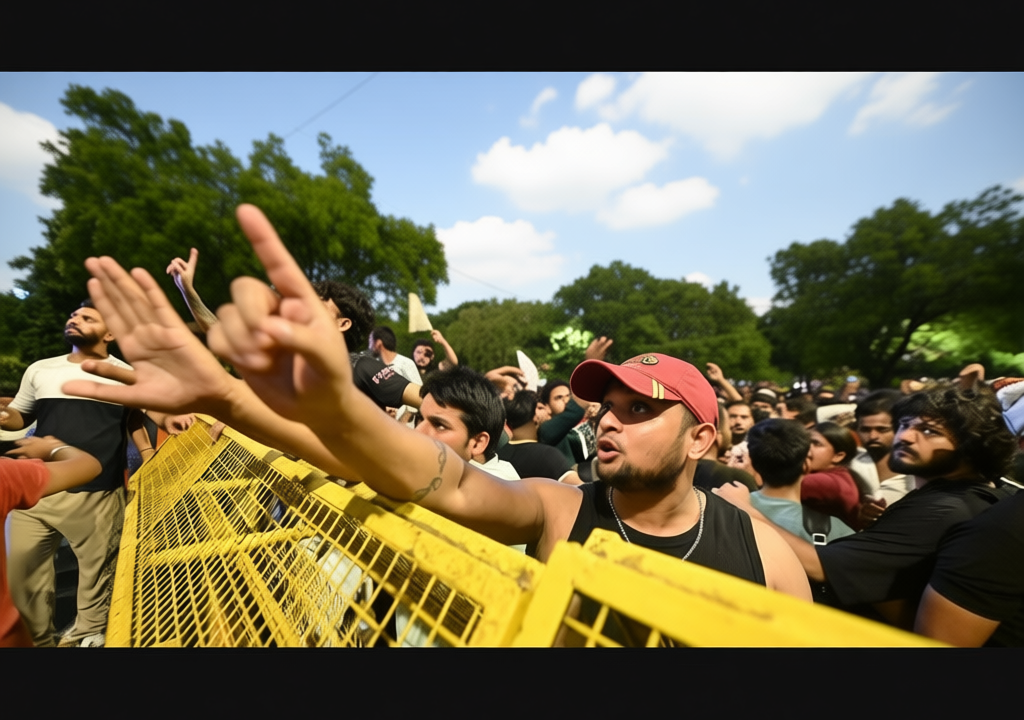
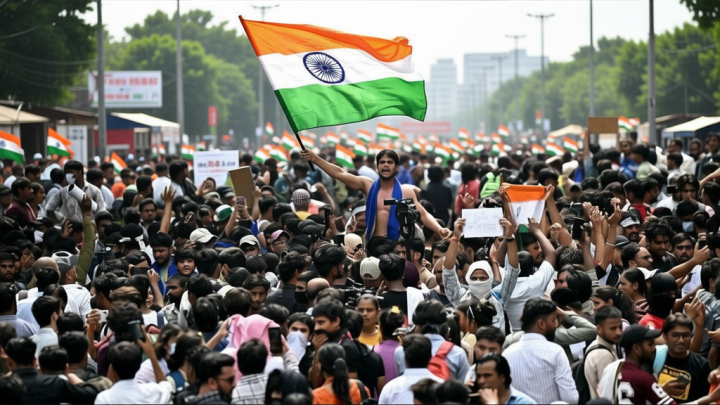
Examining the current Jantar Mantar demonstrations requires understanding their multifaceted nature. This spontaneous gathering combines several distinct groups working together. The largest segment consists of politically independent students expressing pent-up frustration while remaining determined to protect their interests. A second group includes activists supporting the Cockroach Janta Party’s agenda. Left-wing organizations such as SFI and AISA contribute another layer. Finally, representatives from Congress and Aam Aadmi parties complete the coalition.
The movement’s fluid expansion reflects a principle articulated by Russian revolutionary Leon Trotsky:
“March separately, but strike together.”
This philosophy explains regional variations in protest participation. A Congress invitation mobilizes youth in Kota or Uttarakhand, while CJP appeals attract Delhi crowds. The question remains whether this momentum will sustain itself. The answer is negative—movements naturally evolve. However, protesters possess a crucial mechanism to maintain enthusiasm during quieter phases: mobile phones. Digital connectivity enables continuous strategy development even when physical gatherings pause.
Government Concerns and Generational Shifts
What troubles authorities most extends beyond immediate reactions. Long-term consequences worry policymakers significantly. Gen Z represents approximately 28 percent of India’s total population. Authorities recognize that restricting internet access could trigger explosive reactions rather than calm them. For younger generations, digital connectivity holds greater importance than daily political controversies or traditional human rights concerns. Nepal demonstrates this phenomenon clearly—internet restrictions fueled widespread anger among youth and ultimately transformed the government.
These protests also signal a broader transformation in Indian politics. Traditional divisions based on caste, community, and religious identity are giving way to class-conscious voting patterns. This shift toward socioeconomic alignment may receive additional momentum if current leadership maintains an inflexible stance.