Activist Attacked on Live TV for Opposing Politicisation of Hinduism
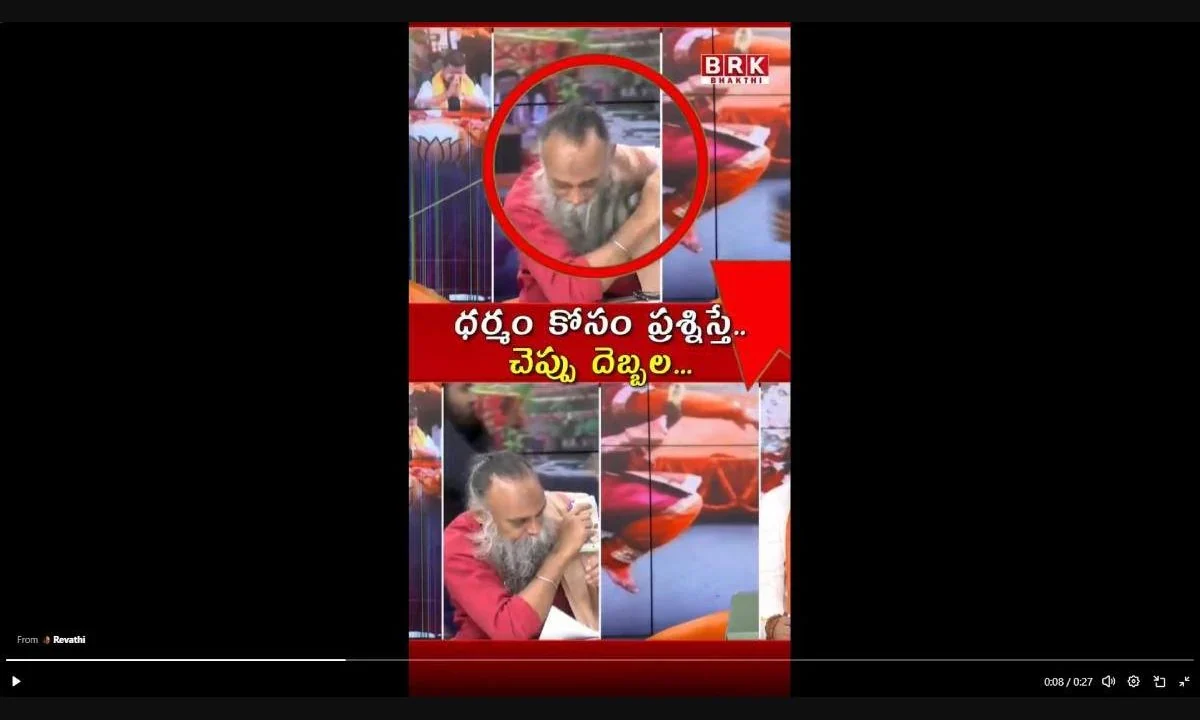
Indiadailyupdate.com – In a shocking incident that sparked widespread debate, an activist was attacked on live television for opposing the politicisation of Hinduism. T.V. Ramana Murthy, a vocal critic of the Rashtriya Swayamsevak Sangh (RSS), found himself at the center of controversy during a televised debate. The assault, which occurred on the night of Tuesday, was captured in real-time by millions of viewers and quickly became a symbol of growing tensions over the role of religion in politics.
The Viral Attack and Its Immediate Impact
Kashyap Reddy, who introduced himself as “Dharmaveer Kashyap,” launched the attack on Murthy during a live broadcast on a prominent news channel. The incident unfolded dramatically as Reddy struck Murthy with a shoe, leaving the activist visibly shaken. This unscripted moment of violence not only stunned the audience but also ignited a firestorm of reactions across social media platforms. The video of the attack was shared extensively on YouTube and Facebook, with users calling for transparency and accountability in the handling of such public disputes.
The debate had been centered on the RSS’s influence in shaping religious narratives for political gain. Murthy had previously criticised the Rashtriya Swayamsevak Sangh for using Hinduism as a tool to advance its agenda, particularly in the context of the Ram Temple movement. His remarks highlighted concerns about the financial impropriety of the Ram Janmabhoomi Nyas, the trust overseeing the construction of the temple in Ayodhya, and the alleged corruption within the Vishwa Hindu Parishad (VHP).
Political Context and Historical Backdrop
As the debate progressed, Murthy’s criticisms of the BJP’s religious policies became a focal point. He had argued that the party’s alignment of Prime Minister Narendra Modi’s image with ancient deities like Rama and Krishna was a deliberate strategy to consolidate political power. This claim resonated with many who viewed the politicisation of Hinduism as a way to marginalise secular voices in Indian society. The attack on Murthy was seen by some as a calculated move to silence dissent and reinforce the RSS’s dominance in the narrative around the Ram Temple.
The incident also drew attention to the broader history of the Ayodhya dispute, which has been a flashpoint for religious and political discourse for decades. The construction of the Ram Temple in the disputed site has been a contentious issue, with accusations of financial mismanagement and political manipulation surfacing over the years. Murthy’s allegations about the VHP and Bajrang Dal’s control over the movement were further contextualised by his reference to the 1993 murder of Baba Lal Das, the priest who had been critical of the Sangh organisations’ handling of the temple’s finances.
“The Sangh Parivar has looted hundreds of crores in the name of Ram over the decades, and Lal Das paid with his life for questioning it,” Murthy said, linking the unresolved case to recent corruption scandals within the Ram Janmabhoomi Teerth Kshetra Trust.
Following the attack, Murthy reiterated his stance on the need for transparency in the temple movement. He accused the Sangh Parivar of sidelining the Nirmohi Akhara, a traditional sect that had been advocating for a more inclusive approach to the Ayodhya issue. The activist’s comments underscored the deepening divide between secular and religious factions in the debate over Hindu identity and governance. As the controversy grew, calls for stricter security measures during live debates intensified, with many arguing that such incidents highlight the risks of open discourse in a polarised political climate.
Public Reaction and Calls for Accountability
The live attack on Murthy became a rallying point for critics of religious nationalism, with social media users and civil society groups demanding justice for the activist. Clips of the confrontation were widely shared, prompting discussions about the role of media in amplifying political conflicts. Some analysts pointed to the incident as a reflection of the increasing aggression in public debates, where opposing views are sometimes met with physical force rather than reasoned argument.
Murthy’s continued activism in the face of the attack demonstrated his resolve to challenge the politicisation of Hinduism. He called the current investigation into the Ram Temple trust’s finances “only the tip of the iceberg,” suggesting that deeper corruption within the Sangh Parivar would eventually come to light. The activist’s comments also highlighted the timing of the temple’s opening to the public, which he claimed was rushed to align with the 2024 general election schedule. This move, he argued, prioritised political gains over the completion of the project and the interests of the local community.
As the debate on Hinduism’s role in politics continues, the incident serves as a stark reminder of the intensity with which ideological differences can be contested. Murthy’s experience on live television has only strengthened his position as a prominent figure in the ongoing discourse about religious governance in India. The incident also raises questions about the safety of public figures and the effectiveness of security protocols in high-profile debates. With the focus keyword “Activist attacked on live TV” woven naturally into the narrative, the article now provides a more comprehensive analysis of the event’s significance and its impact on public opinion.