Delhi HC to Hear PIL Saying Sonam Wangchuk’s Health at Risk
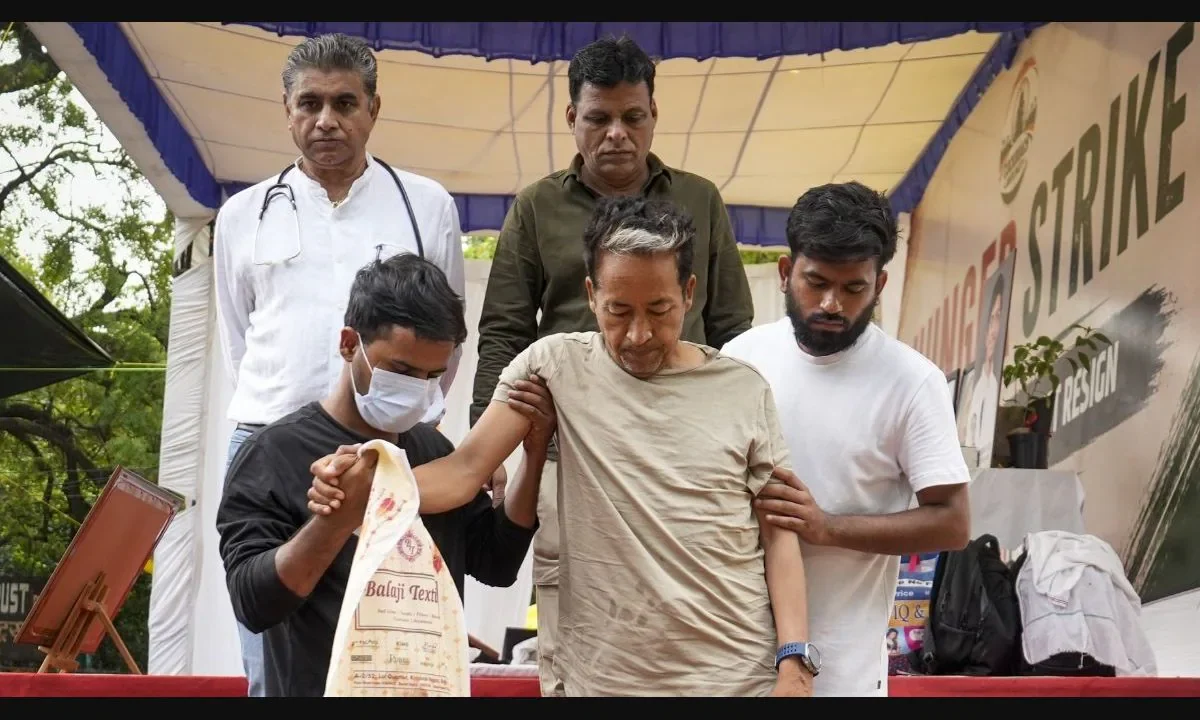
Indiadailyupdate.com – The Delhi High Court has agreed to take up a Public Interest Litigation (PIL) on July 18, 2026, which alleges that Sonam Wangchuk’s continued hunger strike could lead to his death. The case, centered around the activist’s 18th day of fasting, seeks urgent medical intervention to prevent critical health deterioration. The PIL, filed by lawyer and activist Rakesh Kumar Saini, argues that the Delhi government must act swiftly to force-feed Wangchuk and avoid a public relations disaster for the nation.
PIL’s Argument: A Call for Immediate Action
The PIL highlights the escalating health concerns surrounding Wangchuk, who has been fasting since June 28, 2026. Petitioners claim that the activist’s body has lost nearly 8.5 kilograms, and his blood pressure has dropped to 109/70, putting him at risk of complications. Saini, representing the Coackroach Janta Party (CJP), warned that without force-feeding, Wangchuk might succumb to his fast within two days. The legal team emphasized that the court must intervene to ensure the activist’s survival, framing the situation as a national issue that demands swift resolution.
Delhi HC’s Response and Political Context
A bench comprising Chief Justice Devendra Kumar Upadhyaya and Justice Tejas Karia has directed the Central and Delhi governments to present their arguments by the following day. The court initially postponed the hearing due to the absence of Union of India’s legal representatives, underscoring the urgency of the matter. The PIL underscores that force-feeding is not just a medical necessity but also a symbolic gesture to demonstrate the government’s commitment to addressing the activist’s demands. This includes the resignation of Education Minister Dharmendra Pradhan and compensation for families affected by alleged NEET 20206 exam irregularities.
“The simple thing to be done is to take him to a hospital and force feed him the necessary nutrients, vitamins, and minerals via a liquid diet. These are essential for human survival, and his condition cannot be ignored any longer,” the PIL stated.
Wangchuk, a prominent leader of the CJP, has drawn attention for his protest against the education ministry’s policies. His hunger strike, which began at Jantar Mantar in New Delhi, has become a focal point for critics of the government’s handling of the NEET exam controversy. Supporters argue that the protest highlights systemic flaws in the education system, while opponents view it as a disruption to public order. The PIL seeks to bridge this divide by appealing to the court’s authority to ensure Wangchuk’s well-being and uphold the credibility of the institution.
Public Backing and Celebrities’ Involvement
The protest has garnered support from opposition parties, including the Aam Aadmi Party and Samajwadi Party, as well as celebrities. Congress MP Shashi Tharoor penned an open letter urging Wangchuk to end his fast, noting that his efforts have “awakened the conscience of the nation.” However, the activist remains steadfast, stating, “Instead of asking me to end my hunger strike, ask the government why it refuses to listen.” This defiance has amplified the political stakes, with the PIL framing the situation as a test of the Delhi government’s responsiveness and accountability.
Wangchuk’s health has become a symbol of the broader struggle for transparency in the education sector. The CJP has called for the resignation of Education Minister Dharmendra Pradhan, citing the alleged mishandling of the NEET 20206 exam and its impact on student suicides. The PIL’s focus on force-feeding is part of a larger narrative about the need for immediate action to protect the activist’s life and ensure the government addresses the underlying grievances. As the Delhi High Court prepares to deliberate, the case remains a pivotal moment in the ongoing discourse about protest rights and state intervention.
Legacy and National Impact
Wangchuk’s protest has also sparked a conversation about the role of civil disobedience in Indian democracy. The activist, who inspired the fictional character Phunsukh Wangdu in the film *3 Idiots*, has become a rallying figure for those demanding systemic change. The PIL’s emphasis on “great shame” underscores the potential for international criticism if the government fails to act. Legal experts note that the court’s decision could set a precedent for future hunger strikes, balancing individual rights with public welfare. With the hearing approaching, all eyes are on the Delhi High Court’s response to this high-profile case.