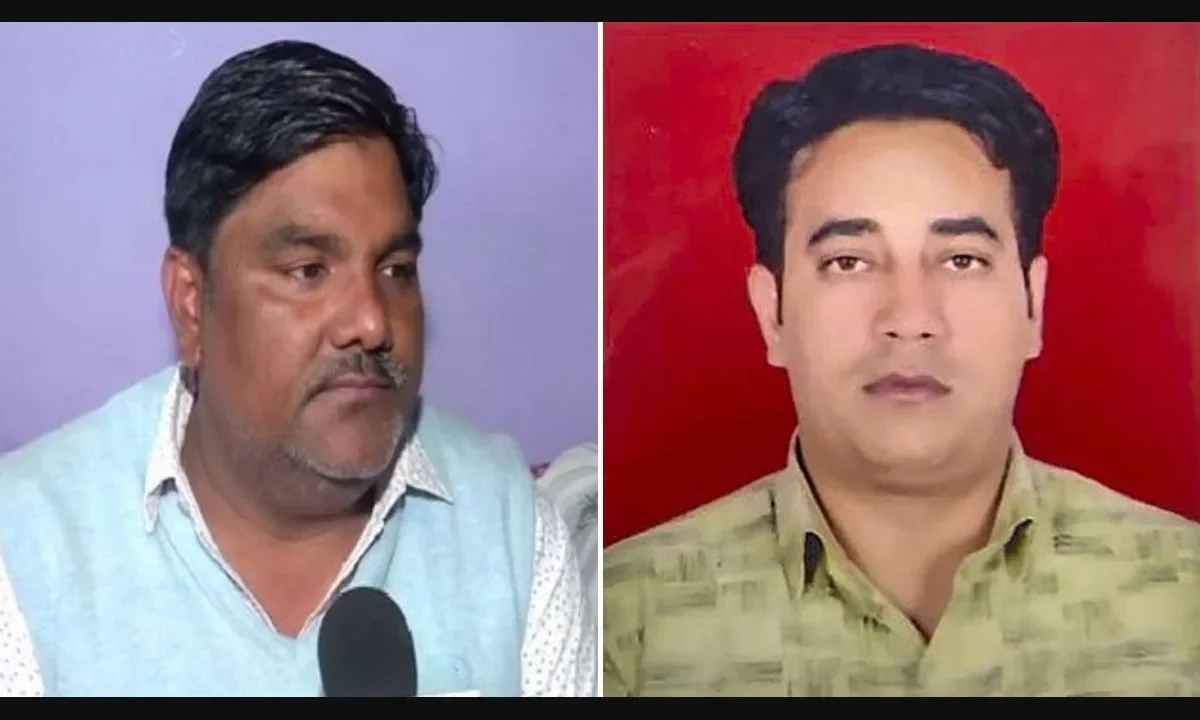
Delhi Riots: Ex-AAP Leader Tahir Hussain Among 6 Convicted in Ankit Sharma Murder Case
Conviction in the 2020 Delhi Riots
Indiadailyupdate.com – The Delhi riots of 2020 took a significant turn as a Delhi court recently convicted six individuals, including former Aam Aadmi Party (AAP) leader Tahir Hussain, in the murder of Intelligence Bureau (IB) staffer Ankit Sharma. Additional Sessions Judge Praveen Singh of the Karkardooma Court delivered the verdict, linking the incident to the widespread violence that erupted across the city in February 2020. This case has drawn renewed attention to the role of political figures in inciting unrest during the riots, with the conviction serving as a milestone in the judicial resolution of the events.
Ankit Sharma, a 26-year-old IB officer, disappeared after stepping out to buy groceries on February 25, 2020, an incident that became a symbol of the chaos unleashed during the riots. His body was later found in a drain near a mosque in Chand Bagh, northeast Delhi, and was confirmed dead by GTB Hospital. The legal proceedings, which spanned several years, involved meticulous investigations into the circumstances surrounding his death, shedding light on the complex web of motivations and actions that led to the tragic outcome.
Legal Charges and Sentencing Outcomes
Tahir Hussain, a municipal councillor from East Delhi’s Mustafabad constituency, faces multiple charges under Sections 188, 153A, 147, 148, 149, 365, and 302 of the Indian Penal Code (IPC). While he was acquitted of offenses related to Sections 120B and 129, the conviction under 302 for murder underscores his direct involvement in the attack. The court also cleared six of the 11 initially accused individuals, though Hussain’s bail application had been rejected by the Delhi High Court in September 2025, highlighting the gravity of the charges against him.
“The conviction reflects the court’s acknowledgment of the political dimensions of the Delhi riots,” noted a LiveLaw report. “The evidence presented connects the accused to the mob that targeted Sharma, emphasizing the role of organized influence in the violence.”
The case has become a focal point for discussions on accountability during the riots, with legal experts and activists calling for stricter measures to prevent such incidents in the future. The sentencing arguments, set to be presented after the court’s written order on Tuesday, will determine the penalties for the six convicted, potentially marking a turning point in the aftermath of the 2020 unrest.
Background of the Accused and the 2020 Riots
Tahir Hussain, a prominent figure in the 2017 municipal elections, was known for his wealth, having declared assets worth Rs 16 crore in his election affidavit. His political stature and local influence are now under scrutiny, as the conviction ties his actions to the violence that characterized the 2020 Delhi riots. The four other convicts—Nazim, Kazim, Javed, and Anas—were all linked to rioting offenses, with their roles in the attack further emphasizing the collective responsibility during the riots.
The 2020 Delhi riots, sparked by tensions over the Citizenship Amendment Act (CAA), saw widespread communal violence across the city. The attack on Ankit Sharma, who was targeted for his role as an IB officer, became a pivotal moment in the riots. His family alleges that Hussain’s influence over the mob led to his brutal murder, a claim supported by the postmortem report, which revealed 51 injuries, predominantly from sharp-edged weapons and blunt force trauma. This evidence has been crucial in establishing the connection between the accused and the crime.
Public Reaction and Legal Implications
The conviction has sparked mixed reactions across Delhi. While some view it as a necessary step toward justice, others argue that the legal process could have been expedited to provide quicker closure to the families of the victims. Public figures and community leaders have emphasized the importance of this case in holding political actors accountable for their roles during the riots, which left hundreds dead and thousands injured. The sentencing of Hussain and the five others is seen as a landmark decision, reinforcing the legal framework to address violence linked to political mobilization.
Delhi riots often serve as a microcosm of broader societal tensions, and this case exemplifies the intersection of political rhetoric and physical violence. The trial has highlighted the need for a thorough examination of how political leaders can impact the course of riots, either by inciting violence or by providing support to the perpetrators. As the court prepares to deliver the final verdict, the case stands as a testament to the resilience of the legal system in seeking justice even amidst chaotic events.