Karur Stampede: Supreme Court Clarifies Role, Allows Chief Minister to Continue Public Comments
Indiadailyupdate.com – The Karur stampede has once again drawn attention to the balance between political discourse and judicial oversight. In a recent ruling, the Supreme Court emphasized its commitment to upholding the separation of powers, declining to impose restrictions on Tamil Nadu Chief Minister C. Joseph Vijay’s public statements regarding the ongoing investigation into the incident. The court’s decision, delivered during a hearing on the matter, underlines its stance that political leaders should not be constrained in their communication unless there is clear evidence of prejudice to the legal process.
Background of the Karur Stampede
The Karur stampede occurred in July 2026, resulting in multiple fatalities and raising questions about accountability and transparency. The incident, which took place in a crowded public space, sparked public outrage and prompted the government to initiate a swift response. The Central Bureau of Investigation (CBI) was appointed to lead the probe, ensuring an independent assessment of the events. This move was seen as a critical step to prevent political interference in the investigation process.
DMK’s Argument and the Court’s Response
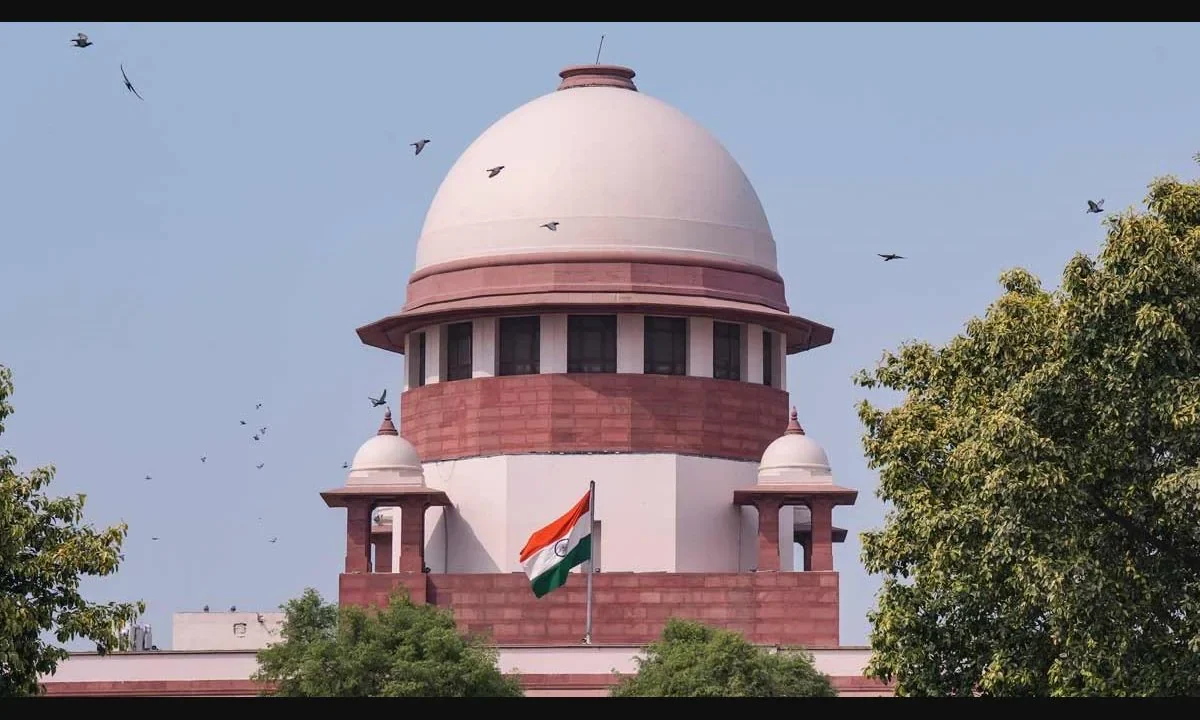
The Dravida Munnetra Kazhagam (DMK) submitted an application seeking to limit Vijay’s public comments on the Karur stampede case, arguing that his remarks could influence witnesses and compromise the integrity of the CBI investigation. The party cited specific concerns about Vijay’s planned meeting with the victims’ families, where he would offer compensation and distribute compassionate appointment orders. However, the Supreme Court bench, comprising Justices K.V. Viswanathan and Alok Aradhe, dismissed the urgency of the plea, emphasizing that public discourse should not be stifled without concrete justification.
“Do you want us to regulate the chief minister’s meeting? Fix his itinerary?” Justice Viswanathan questioned, highlighting the court’s reluctance to meddle in political activities. The bench also noted that Vijay had not been named as an accused in the FIRs, reinforcing the idea that his role as a political leader should not be conflated with that of a suspect in the case.
The court’s ruling underscores its dedication to allowing elected officials to engage with the public freely. Justice Alok Aradhe added that the Supreme Court should not become a “political forum” for resolving disputes related to public statements. This sentiment was echoed by senior advocate Neeraj Kishan Kaul, who argued that Vijay’s actions were part of his responsibilities as a leader and not an obstruction to justice.
Despite the court’s decision, the DMK remains determined to address its concerns through alternative legal avenues. The party announced plans to approach the Rastogi committee, which oversees the investigation, and potentially initiate contempt proceedings against Tamil Nadu minister Aadhav Arjuna for his remarks on the Karur stampede. While the immediate request for an injunction was withdrawn, the DMK’s persistence signals ongoing tensions between political accountability and judicial independence.
The ruling has broader implications for how public officials can navigate legal inquiries without fear of censorship. By allowing Vijay to proceed with his scheduled engagement, the Supreme Court has set a precedent that prioritizes free speech over preemptive judicial intervention. This decision may also encourage other political leaders to continue expressing their views on sensitive cases without hesitation, provided they maintain a level of impartiality in their communication.