Mumbai’s Treefall Deaths: How Development Projects Are Making Monsoons More Deadly
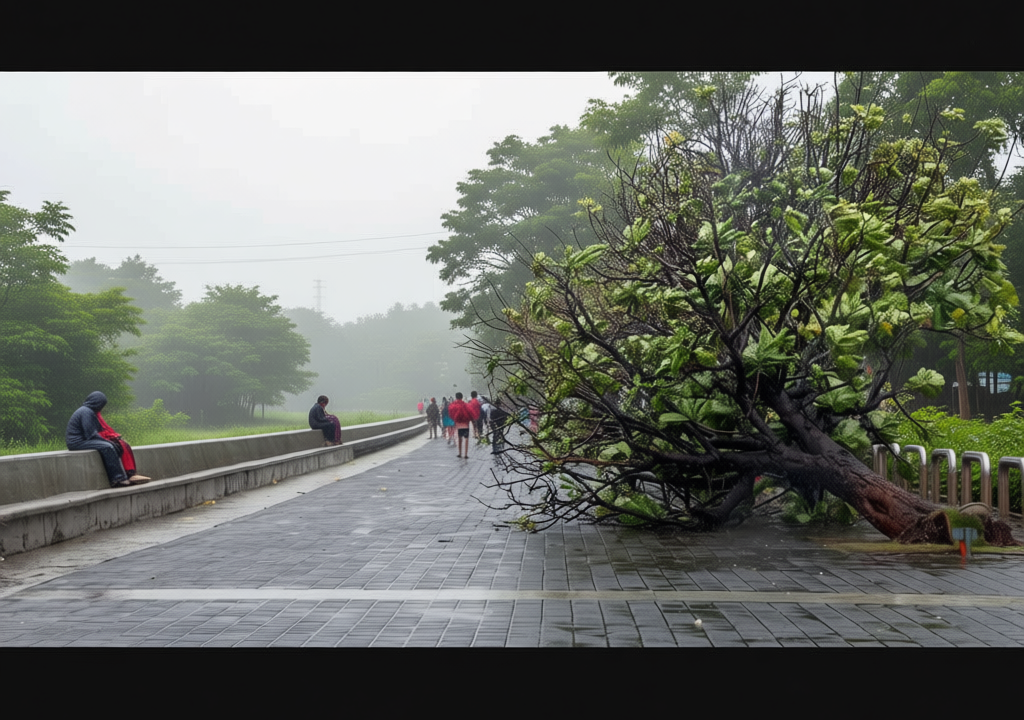
Indiadailyupdate.com – With Mumbai’s treefall deaths increasing during the monsoon season, the city is facing growing concerns over the impact of rapid urban development. The recent incident in Kurla, where a 46-year-old man was killed by a falling branch, has intensified scrutiny on the Brihanmumbai Municipal Corporation (BMC) and its large-scale road concretisation efforts. As Mumbai’s infrastructure expands, the delicate balance between progress and environmental preservation is being tested, raising questions about whether development works are intensifying the risks of monsoon-related tree collapses.
Urban Expansion and Root Zone Constraints
The challenge of Mumbai’s treefall deaths is closely tied to the city’s approach to road construction. Environmentalists and urban planners warn that the encroachment on tree root zones has weakened the city’s natural defenses against monsoon storms. While BMC has been concretising roads to improve traffic flow, this process often limits the space trees need to grow. Tina Sachdev, a resident of Prabhadevi’s Kashinath Dhuru road, highlighted the issue:
“They are encasing roads around existing trees across the entire city, which is the core problem. The soil becomes loose, roots weaken, and stormy winds can easily uproot even ancient trees.”
This pattern has been observed in multiple districts, contributing to a rise in tree-fall incidents during heavy rainfall.
Studies show that the root zone compromise is not a new issue but one that has worsened over the past decade. Tree roots require adequate space to absorb water and stabilise the soil, yet development projects often leave little room for this. The BMC’s shift from asphalt to concrete has accelerated the problem, as the latter requires more extensive earthworks. Activists argue that this transition has ignored the long-term consequences on the city’s green cover, making monsoon seasons more hazardous for residents.
Infrastructure Priorities and Environmental Neglect
Mumbai’s treefall deaths have become a recurring theme in discussions about urban development. The Brihanmumbai Municipal Corporation (BMC) continues to prioritise infrastructure expansion, with concrete roads being a key component of its modernisation agenda. However, this focus on durability and maintenance has come at a cost to the city’s tree population. Activists like Ketan S from Matunga stress that the failure to adhere to National Green Tribunal (NGT) guidelines has left trees vulnerable.
“The primary problem lies in non-compliance with NGT norms and Tree Authority guidelines,”
he said, pointing out that even basic measures to protect root zones are frequently overlooked.
While concrete roads are designed to withstand heavy traffic and reduce repair costs, their construction often damages the underground networks that sustain trees. Utilities, stormwater drains, and pipelines are frequently installed without sufficient consideration for root systems, leading to structural instability. As a result, the risk of tree-fall incidents during monsoons has escalated, creating a dangerous cycle where development exacerbates natural hazards. This trend underscores the urgent need for a more integrated approach to urban planning that accounts for ecological impacts.
Monsoon-Driven Dangers and Scientific Insights
Experts now link Mumbai’s treefall deaths to a combination of environmental stressors and human intervention. Scientific studies indicate that the roots of trees in urban areas are increasingly compromised by construction activities, making them more susceptible to collapse during heavy monsoon rains. When waterlogged soil combines with weakened roots, the result is a heightened risk of trees falling, which can cause injuries or fatalities. The 11-year-old boy’s death in Chembur last month is a stark reminder of how these incidents can occur with little warning.
Urban ecologists have also pointed to the role of inadequate drainage systems in worsening the problem. Mumbai’s monsoon season is marked by excessive rainfall, but poor drainage allows water to accumulate around tree bases, further destabilising them. The BMC’s recent directive to clear concrete slabs around tree trunks is a step in the right direction, but many argue it is too late. Without addressing the root causes, Mumbai’s treefall deaths are likely to continue, turning the city’s natural landscapes into potential danger zones.
Community Efforts and Policy Reforms
In response to the rising concerns over Mumbai’s treefall deaths, local communities and activists are pushing for policy reforms. Residents are demanding stricter enforcement of NGT guidelines and greater accountability from the BMC in protecting urban trees. Public awareness campaigns have also gained traction, educating citizens about the importance of tree preservation during construction projects. These grassroots efforts highlight the growing pressure on authorities to balance infrastructure needs with environmental sustainability.
Additionally, there is a call for integrating tree health monitoring into urban planning. Experts suggest that regular inspections and maintenance could prevent many of the incidents linked to Mumbai’s treefall deaths. By adopting scientific pruning techniques and ensuring adequate root space, the BMC can mitigate risks and create a more resilient urban ecosystem. Such measures would not only save lives but also preserve the city’s green spaces, which are vital for managing stormwater and reducing urban heat.
As the debate over Mumbai’s treefall deaths continues, it is clear that the city’s development model must evolve. The monsoon season, once a natural event, is now increasingly dangerous due to human-induced vulnerabilities in the urban landscape. Addressing these challenges requires a collective effort from policymakers, developers, and residents to ensure that Mumbai’s growth does not come at the expense of its natural heritage and safety.