Vijay’s Political Masterstroke in Karur Tragedy
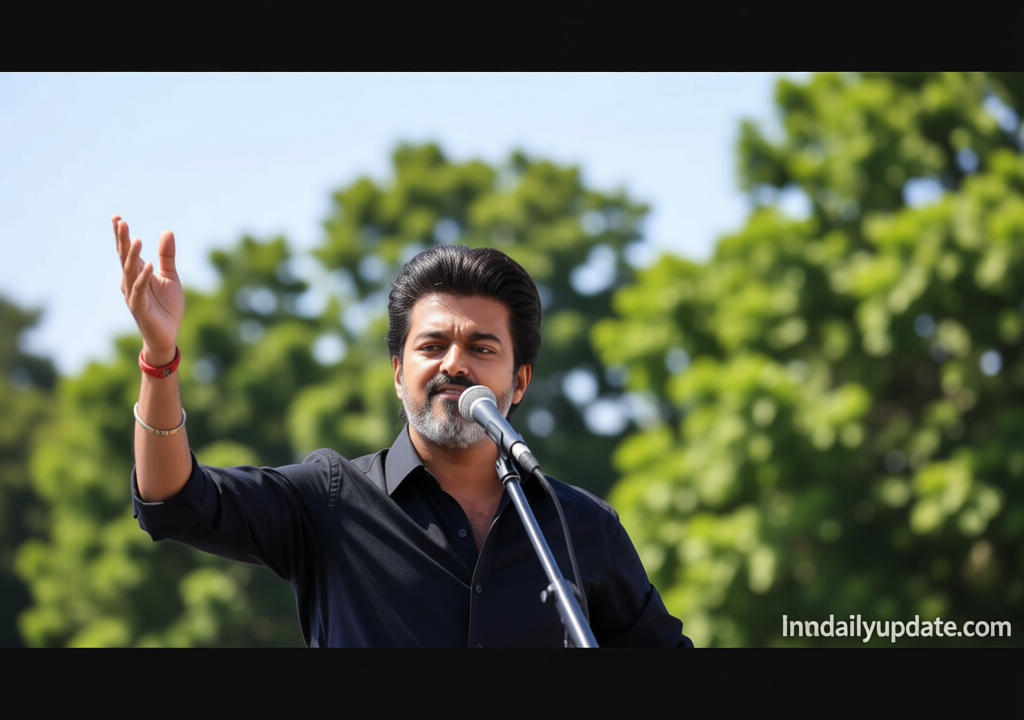
Indiadailyupdate.com – Scars, scrutiny, and kothu parotta—these three elements became the focal point of Tamil Nadu Chief Minister C. Joseph Vijay’s strategic return to Karur nine months after the September 2025 stampede that claimed 41 lives. The visit, a calculated move in the aftermath of his election rally, transformed the district’s trauma into a stage for Vijay to reframe the narrative. Clad in a black ensemble, he arrived as a symbol of both accountability and resilience, his presence contrasting sharply with the chaos that had unfolded. The rally, which had been the catalyst for the disaster, now served as a platform to shift blame and reaffirm his political authority.
The Narrative Shift and Blame Redistribution
Vijay’s address in Karur was a masterclass in political storytelling, where he dissected the incident’s sequence of events with surgical precision. By emphasizing the police’s role, he positioned himself as a victim of systemic neglect rather than a direct culprit. The contrast between Karur’s police and those in Perambalur, where officials had urged him to avoid the venue due to overcrowding, became a central theme. “Why did you blame me?” he thundered, directly addressing his critics, and used this rhetorical device to dismantle the narrative of personal failure. The phrase not only resonated with the audience but also reinforced his image as a leader standing firm against adversity.
“The police themselves escorted us from the highway into that venue…”
Vijay’s claim that the officers had led him into the stampede site was a powerful accusation. By highlighting this, he reframed the tragedy as a coordinated effort to tarnish his reputation. His speech underscored the political stakes, blending empathy for the victims with a pointed critique of the opposition’s tactics. The symbolism of his black attire, paired with the reference to kothu parotta—a local delicacy often associated with communal gatherings—invited reflection on how even moments of cultural unity could become sites of political contention.
Reinventing Leadership Through Crisis
Vijay’s approach to the Karur incident mirrored his broader political strategy: to turn setbacks into opportunities for redefinition. He claimed his administration had already made strides in curbing corruption, asserting that “not a single rupee in bribes” is now taken. This rhetoric positioned him as a reformer who had already repaired the system, making the stampede a reminder of old inefficiencies rather than a reflection of his current governance. His use of rhythmic language, such as “tick, tick, tick,” emphasized progress and control, appealing to voters seeking stability and accountability.
By aligning the tragedy with the broader theme of administrative failure, Vijay shifted focus from his personal responsibility to the collective ineptitude of the opposition. The DMK, often criticized for its sensitivity to corruption allegations, became the scapegoat. Vijay’s sharp wit and metaphorical jabs, such as comparing their defensive reactions to someone shouting “My father is not inside the cupboard!” without being asked, further entrenched his narrative. These rhetorical strategies not only energized his base but also solidified his image as a leader unafraid to challenge the status quo.
Populist Appeal and Electoral Strategy
Vijay’s Karur rally was a masterstroke of populist politics, designed to galvanize support for the upcoming bypolls. By framing the incident as a fight for the people’s trust, he positioned himself as a protector of public interest. His repeated assertion that “this is Vijay’s government” resonated with voters who had grown disillusioned with the DMK’s record. The emphasis on young women as a key constituency—through his calls for accountability and service—added a layer of emotional appeal, aligning his message with the aspirations of a younger, more engaged electorate.
Public reaction to the rally was swift and polarizing. Supporters hailed it as a bold reclamation of political narrative, while critics accused Vijay of exploiting the tragedy for personal gain. The incident’s symbolism, however, proved powerful: kothu parotta, traditionally a shared meal, now became a metaphor for the division of responsibilities between leaders and their followers. This duality—scars of loss and scrutiny as tools of empowerment—underscored Vijay’s ability to adapt his messaging to the evolving political landscape.
Vijay’s Karur visit exemplified his strategic acumen in transforming adversity into political capital. By weaving the tragedy into a broader narrative of reform and accountability, he not only addressed the immediate concerns of the electorate but also laid the groundwork for a long-term shift in power dynamics. The scars of the event served as a backdrop for his populist appeal, while the scrutiny he faced became a testament to his resilience. In doing so, he redefined the incident from a moment of collective grief to a catalyst for political renaissance, solidifying his position as a leader unshaken by crisis.