Teacher Shortage, Not AI, Is India’s Education Challenge
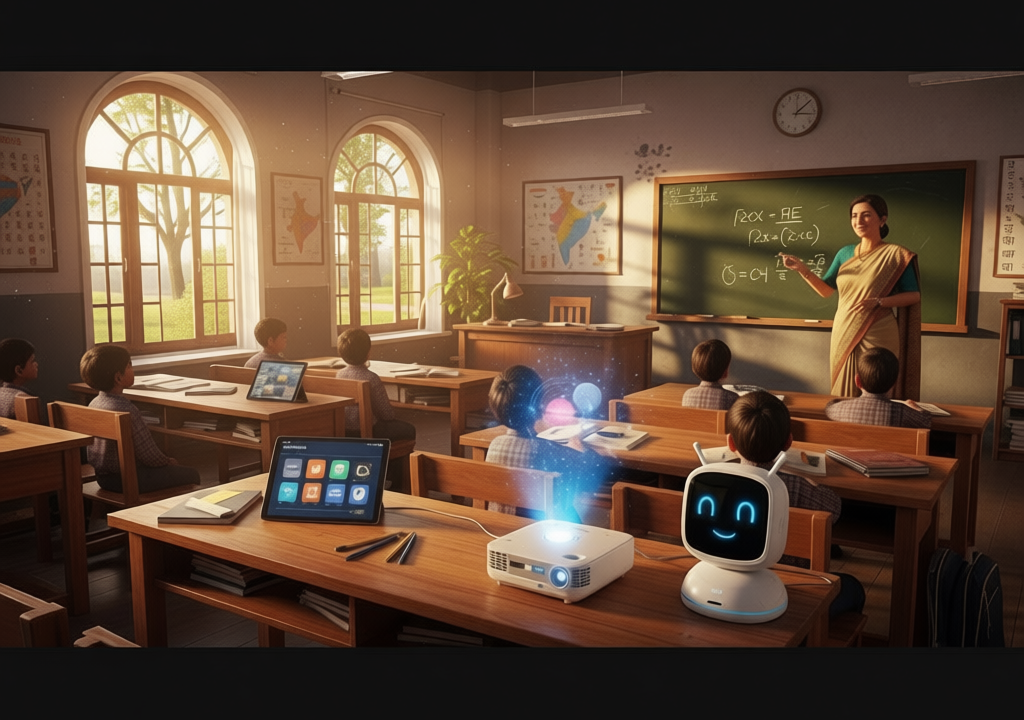
Indiadailyupdate.com – India’s education system faces a formidable obstacle that cannot be easily solved by artificial intelligence: a critical shortage of qualified teachers. Monica Malhotra Kandhari, head of MBD Group, recently emphasized this during an exclusive interview with THE WEEK, stating that while AI technologies are transforming classrooms, they are not a panacea for the deep-rooted issue of inadequate educator numbers. “Teacher shortage not AI is India,” she asserted, highlighting the urgent need to address the human resource deficit that continues to hinder equitable learning opportunities across the nation.
Ashok Samvad Conclave and AASOKA Initiative
Monica Malhotra Kandhari’s insights were shared at the Ashok Samvad, a national leadership gathering organized by MBD Group to commemorate the 81st birthday of its founder, Ashok Kumar Malhotra. This event, part of the Ashok Karya social impact campaign, brought together educationists, policymakers, and school leaders to explore reforms that could uplift India’s learning landscape. Alongside the conclave, the group launched the AASOKA Science Kit Distribution Initiative, a program designed to equip 400 schools with resources for Grade VI students. The initiative includes hands-on science kits, printed materials, digital videos, and training for teachers, particularly in budget schools where laboratory facilities are scarce.
“The teacher remains the person who can change learning outcomes. Technology can support the classroom, but it cannot replace a teacher’s understanding of every child’s needs,” said Kandhari. She called for a focused effort to improve the student-teacher ratio, which she believes is the most pressing issue in India’s education system. “Teacher shortage not AI is India,” she reiterated, urging stakeholders to prioritize addressing this gap before relying heavily on automation.
MBD Group’s AASOKA initiative represents a step towards bridging the divide between technological advancement and human-centric education. By providing students with access to practical science experiments, the program aims to spark curiosity and engagement in subjects that are often neglected due to limited resources. This aligns with Kandhari’s vision of using technology as a tool to enhance learning, not replace it. As the group evaluates expanding the initiative to 800 schools, the emphasis on teacher training underscores the belief that skilled educators are the cornerstone of effective education reform.
Structural Reforms and AI’s Role in Education
Kandhari’s remarks underscore the necessity of systemic changes to address India’s educational challenges. While AI has the potential to revolutionize teaching methods, she argued that it must complement, not substitute, the role of human teachers. “We need more schools, more colleges, and above all, more trained teachers,” she emphasized, highlighting the importance of a well-rounded approach that combines innovation with foundational improvements. The current student-teacher ratio, which remains higher than the global average, is a key factor in the persistent issues of overcrowded classrooms and lack of individualized attention.
“AI can automate tasks and personalize learning, but it cannot replicate the empathy and adaptability of a teacher,” Kandhari explained. Her perspective reflects a broader debate in education circles, where the role of teachers is increasingly being questioned in the face of technological progress. However, she pointed out that AI’s integration into classrooms should be seen as an opportunity to alleviate some of the burdens on educators rather than a solution to the core problem of scarcity. “Teacher shortage not AI is India” remains a central theme, as the focus shifts from replacing teachers to supporting them through modern tools.
MBD Group’s strategy to establish its own school network while expanding its hospitality sector illustrates a multifaceted approach to education and economic development. With 15 new hotels, including Radisson Blu and Radisson Collection properties, the company is leveraging its resources to drive innovation in both sectors. Yet, the underlying message is clear: the teacher shortage in India is a challenge that transcends the classroom, affecting the quality of education and the long-term prospects of students. As the AASOKA program gains momentum, its success will depend on the continued investment in training and retaining educators, ensuring they are equipped to meet the demands of a rapidly evolving learning environment.
Even as the digital transition accelerates, printed textbooks and traditional teaching methods remain vital in India’s educational landscape. Praveen Singh, CEO of MBD Alchemie, noted that the rise of AI does not spell the end of physical books. “Print will continue to win in India over the next ten years,” he remarked, emphasizing that affordability and accessibility are still major hurdles for a fully digital system. While smartphones are becoming more common, many students lack individual devices, making printed materials an essential resource for now. This reality reinforces the idea that “teacher shortage not AI is India,” as educators must rely on these tangible tools to deliver effective instruction despite the challenges of modernization.
The AASOKA Science Kit initiative evolved from MBD’s earlier “Robotics Lab on Wheels” program, which aimed to bring hands-on experimentation to under-resourced schools. This continuity in the group’s efforts highlights a commitment to addressing the root causes of educational inequality. By combining physical kits with digital content, the program not only supports student learning but also provides teachers with the resources to foster creativity and critical thinking. Kandhari’s advocacy for this model reflects a balanced view of the future, where technology enhances rather than replaces the human element of education.
As India continues to navigate the intersection of tradition and technology, the teacher shortage remains a defining issue. Monica Malhotra Kandhari’s perspective at the Ashok Samvad conclave serves as a reminder that while AI offers promising tools for innovation, the heart of education lies in the teacher-student relationship. With initiatives like AASOKA gaining traction, the hope is that these efforts will contribute to a more sustainable solution. “Teacher shortage not AI is India” is not just a statement—it is a call to action for a system that prioritizes the people who drive its transformation.