We voted for change, not this: Kolkata hawkers fight eviction amid BJP governance
Indiadailyupdate.com – In the heart of Kolkata, hawkers who once thrived in the city’s bustling railway stations now find themselves at the center of a political storm. The phrase “We voted for change, not this” echoes through the streets as vendors protest against the BJP-led government’s relentless eviction drive. These street vendors, who have provided livelihoods to thousands for decades, are struggling to adapt to new rules that prioritize compliance over community survival. The KMC’s strict enforcement of regulations has sparked a wave of displacement, leaving many to question whether their votes for change were misdirected.
Under the current administration, the eviction process has accelerated, targeting illegal stalls that have long been part of Kolkata’s urban fabric. Unlike previous governments, which allowed hawkers to operate with minimal oversight, the BJP’s approach emphasizes stricter enforcement of the Kolkata Municipal Corporation Act. Notices have been issued to clear stalls within a week, creating a climate of fear. For many, this is not just about regulations—it’s about the erosion of a way of life that has been sustained for generations. The phrase “We voted for change, not this” has become a rallying cry, symbolizing a disconnect between the government’s promises and the reality on the ground.
Displacement in the shadow of redevelopment
At Sealdah station, Mantu Yadav’s stall has been a family legacy for 40 years. A food vendor, he now faces the threat of losing everything, including his son’s future. “We wanted development, but not at the cost of our livelihoods,” he says, standing beside his now-empty cart. His brother once sold clothes from the same spot, and the family has relied on the income from the station’s bustling foot traffic. The eviction drive, he argues, has been executed without consultation, leaving hawkers with little time to relocate.
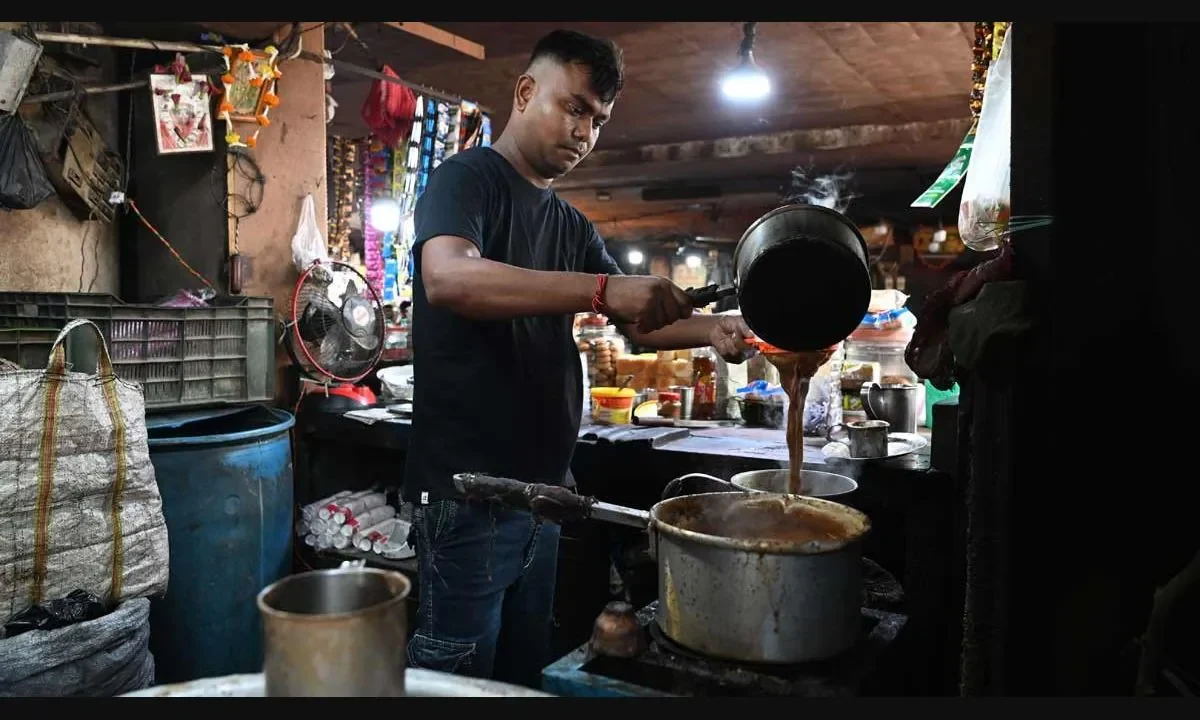
Khokhon Mondol, a tea vendor near the flyover, shares similar frustrations. His stall, marked by a KMC notice citing Section 371 and 516 of the 1980 Act, has become a symbol of the government’s rigid policies. “We voted for a better tomorrow, not for being thrown out of our homes,” he laments. The displacement has been swift, with hundreds of vendors removed overnight. This abrupt change has forced many to seek alternative means of survival, often in more distant locations or under less favorable conditions.
Sarita Mahato, who travels daily from Kalyani to sell corn kerbs, feels the weight of the eviction drive personally. “We all have families—what will we eat?” she asks, highlighting the emotional and financial strain. Her daily earnings of Rs. 200 are now at risk, with her family’s survival hanging in the balance. The KMC’s actions have rippled beyond individual stalls, affecting the entire ecosystem of vendors that has existed at Kolkata’s railway stations for decades.
Legal delays and a fragile reprieve
The Calcutta High Court initially granted a temporary halt to evictions, giving vendors a brief window of hope. This pause, extended until the first week of July, allowed some to continue their operations while negotiations unfolded. Chief Minister Suvendu Adhikari’s engagement with the Hawkers Joint Action Committee was seen as a step toward reconciliation, but the delay only underscored the urgency of the situation. “We voted for change, not for this chaos,” one vendor remarked, reflecting the widespread sentiment that the eviction process has been hasty and unyielding.
Despite the legal respite, the uncertainty remains. The government has pledged to address the issue by October, aligning the eviction timeline with the Durga Puja festival. This pause, however, has not stopped the displacement. In Hazra, for instance, vendors continue to face pressure, with the government insisting that urban renewal is necessary. “We understand the need for development,” says a vendor in Hazra, “but we were promised support, not sudden removal.” The balance between modernization and preservation of tradition is a central issue in the ongoing debate.
As the eviction drive continues, the impact on Kolkata’s economy and culture becomes more pronounced. Vendors, who contribute significantly to local commerce, are now navigating an uncertain future. The government’s commitment to regularization is welcomed, but the lack of clear timelines and support mechanisms has left many stranded. “We voted for change, not for losing our identity,” says another hawker, capturing the essence of the movement. The struggle is not just about survival—it’s about maintaining the city’s heritage and ensuring that development benefits all, not just the privileged few.
Community leaders and activists are pushing for dialogue, urging the government to address the concerns of hawkers. They argue that the eviction drive, while aimed at tidying up public spaces, has overlooked the socio-economic realities of the vendors. “The government needs to provide alternative spaces and financial assistance,” one activist stated. This call for cooperation highlights the need for a more inclusive approach to urban governance. As the fight for survival continues, the question remains: will the BJP’s policies deliver the promised change, or will they leave the city’s hawkers behind?
With the upcoming Durga Puja season, the government’s plans for a temporary halt in evictions offer a glimmer of hope. The festival, a cornerstone of Kolkata’s cultural calendar, is expected to bring a surge in foot traffic, potentially aiding vendors in finding new opportunities. However, the uncertainty persists. “We need more than a pause—we need a solution,” says a vendor. As the city braces for the festival, the fate of its hawkers hangs in the balance, symbolizing a broader struggle between progress and tradition. The phrase “We voted for change, not this” continues to resonate, reminding all that the true measure of change lies in its ability to uplift, not displace.