Why ACB’s Rs 200 Crore Case Against DSP Bheem Reddy Fails to Curb Telangana Corruption
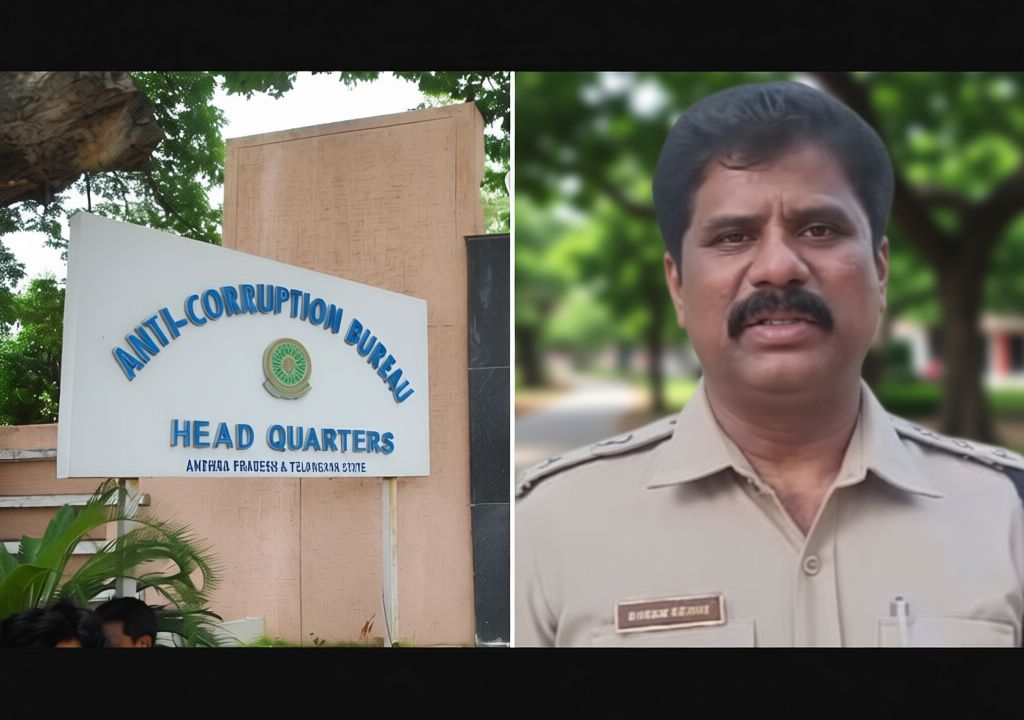
Indiadailyupdate.com – The State Anti-Corruption Bureau (ACB) has recently initiated a high-profile investigation into DSP S. Bheem Reddy, accusing him of holding assets valued at Rs 200 crore that exceed his legal income. This case has sparked renewed debates about the effectiveness of anti-corruption mechanisms in Telangana. While the ACB’s efforts to root out graft have intensified over the past year, critics argue that the process remains bogged down by bureaucratic delays and political interference, leaving corruption unchecked despite visible scrutiny.
At the heart of the ACB’s challenge lies the slow pace of judicial and administrative resolution. A former government official explained that the system is designed to allow officials to manipulate outcomes for years. “Even with clear evidence, cases can take a decade to conclude,” they noted. During this time, politicians and ministers often shield those involved, ensuring that charges are either dismissed or reduced to minimal consequences. The ACB’s role, though important, becomes symbolic when it lacks the authority to enforce decisions independently.
“Corrupt officials understand the game well. They know whom to approach, and the system bends to protect them,” said the official, highlighting how political connections can override merit-based justice.
According to data from the Forum for Good Governance (FGG), the ACB has launched 621 cases since July 2020. However, only 521 of these have been fully investigated, and the majority have not proceeded to prosecution. Instead, they are funneled into internal reviews, where bribes can still influence decisions. This trend underscores a systemic issue: the bureau’s investigations are often stalled before reaching the final stages, where accountability is most crucial.
The Political Influence on Justice
Political interference remains a significant barrier to effective anti-corruption measures in Telangana. A public servant from Andhra Pradesh shared insights into how officials can evade consequences despite being implicated. “A senior officer was reprimanded for compiling a list of corrupt individuals, yet continued to receive promotions. The government lacks the will to punish its own ranks,” they explained. This culture of protection ensures that even when evidence mounts, the guilty often escape severe penalties.
Furthermore, the judicial process in India is notoriously slow. Cases that reach courtrooms often linger for years, with procedural delays and a lack of resources prolonging the journey toward verdicts. Dr. Jayaprakash Narayan, president of Lok Satta, noted that “the judiciary, while independent, is not immune to political pressures.” Even when a judge is found to have amassed crores in cash, the delay in sentencing reinforces the perception that corruption is a manageable risk rather than a punishable offense.
A Global Contrast: Lessons from Illinois
In contrast to Telangana’s sluggish approach, the case of Illinois Governor Rod Blagojevich demonstrates a more efficient system. Blagojevich was impeached and sentenced to 15 years in prison for selling a Senate seat for personal gain. His downfall was swift, thanks to federal wiretaps and a transparent legal process. “This shows how accountability can be enforced when institutions are empowered,” said Narayan. “India needs such a model to transform its anti-corruption efforts.”
Blagojevich’s case highlights the importance of swift legal action and institutional independence. In Telangana, the ACB’s investigations, while thorough, often stall at the government approval stage. Narayan emphasized that the Rs 200 crore case against Bheem Reddy is a rare instance of high-profile scrutiny but lacks the momentum to drive long-term change. “Unless the system is reformed to prioritize justice over political loyalty, these cases will remain window dressing,” he argued.
The ACB’s current strategy may not be enough to curb Telangana’s deep-rooted corruption. While the Rs 200 crore case against DSP Bheem Reddy is a significant step, it reveals the broader challenges faced by anti-graft agencies. These include reliance on government discretion, delays in judicial proceedings, and the influence of political networks. Without systemic reforms, such cases will continue to be exceptions rather than the rule, failing to address the structural issues that enable corruption to thrive.