Why HYDRAA’s ‘Common Purpose Land’ Model Matters for Whole India
A New Approach to Governance
Indiadailyupdate.com – When private interests seize land meant for public use, how do ordinary citizens fight back? This question lies at the heart of a recent case involving HYDRAA, the Hyderabad Disaster Response and Asset Protection Agency. In Gachibowli, an area central to the IT sector, hundreds of middle-class families purchased flats in the FCI Layout. Yet, a businessman named Sridhar Rao allegedly gained control of the entire development by acquiring a majority of the plots. Now, HYDRAA and local municipal officials have stepped in, revealing that Rao is continuing construction despite a court order to halt work.
The agency’s focus extends beyond government-owned property. It now targets common-purpose lands—areas designated for roads, parks, and communal spaces—that are often overlooked in traditional dispute resolution. This proactive strategy has allowed HYDRAA to address issues that civic authorities typically defer to the judiciary. While courts are not inherently corrupt, they can be swayed by those with deeper financial resources, creating a gap in justice for average citizens.
Case Study: Sridhar Rao’s Encroachment
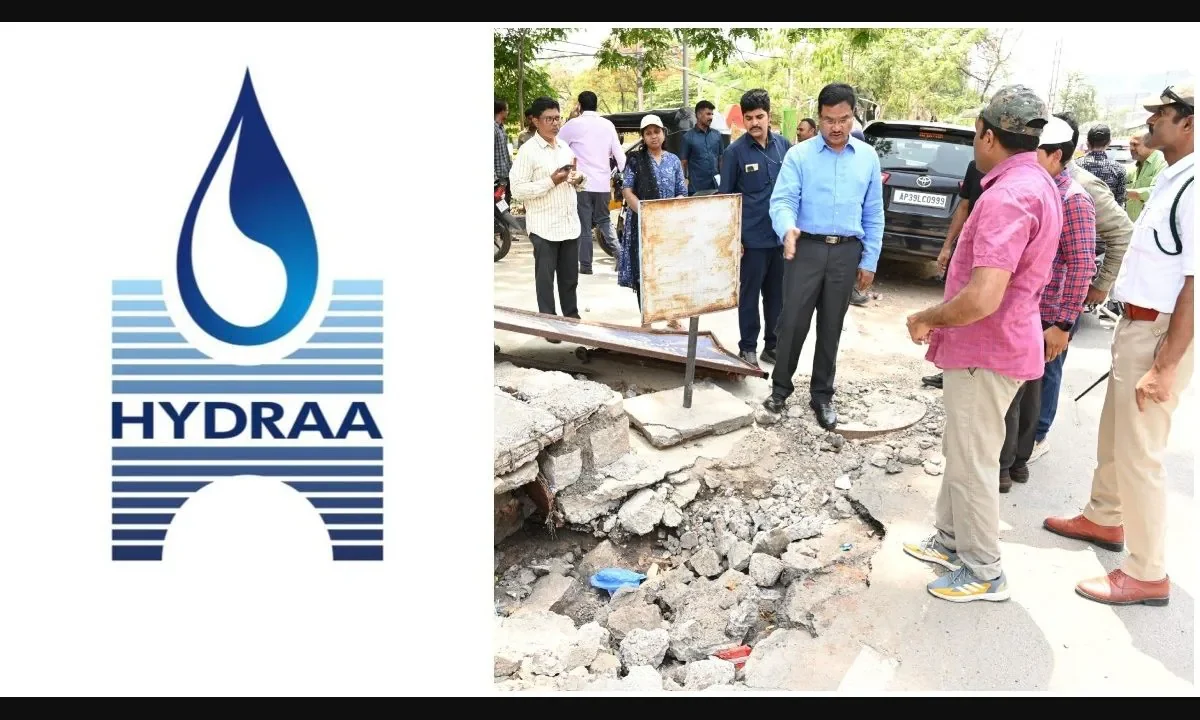
On July 8, HYDRAA Commissioner A.V. Ranganath and Cyberabad Municipal Commissioner G. Srijana visited the FCI Layout. Their investigation confirmed that Rao had encroached on public spaces, including roads and green areas. This isn’t an isolated incident. In a prior case, Nalla Malla Reddy, a real estate developer and educator, built walls around Divya Nagar, a residential colony. With over 2,200 plots sold in a 200-acre layout, he retained control of unsold plots, effectively turning the area into a private gated community.
Ranganath explained that HYDRAA distinguishes between private encroachments and disputes over shared land. “When we enter a layout to examine common areas, we rely on government records to identify the original legal boundaries. This process helps victims understand their rights,” he said. However, he noted that cases without common-purpose lands remain under judicial review, as they involve more complex legal frameworks.
“We don’t treat private encroachments of common purpose lands as civil disputes. When we enter a layout looking for common lands, we will obviously see the original legal establishment of the layout, and in that process, the victims also benefit. We show them their plots as per the government records,” explained Ranganath, talking to THE WEEK.
Judicial Challenges and HYDRAA’s Innovation
HYDRAA’s intervention has saved multiple layouts by bridging the gap between civic action and judicial oversight. In one notable instance, Rao’s legal team even imprisoned the wife of an army officer to challenge his actions. She eventually reached the Supreme Court, which criticized the High Court’s hasty dismissal of the case. The apex court highlighted the lack of due process in the earlier rulings, emphasizing the need for a more rigorous examination of the matter.
While HYDRAA’s model has shown promise, its current challenge with Sridhar Rao underscores the complexities of enforcing such policies. “This case may not be as straightforward as others, given Rao’s legal preparedness,” Ranganath acknowledged. The agency’s ability to reclaim public spaces through a combination of on-site inspections and document verification has set a precedent, offering a unique solution to a systemic problem in land governance.
With 50 complaints processed weekly, HYDRAA’s approach demonstrates how specialized agencies can empower citizens. By prioritizing shared land disputes, it aims to restore trust in public infrastructure and ensure that development benefits the broader community rather than a select few. This model could reshape the way land rights are managed across India, particularly in rapidly urbanizing regions.